
In short
- An independent guide with no ads, sponsors, affiliate links or products to sell.
- Written for beginners and regular practitioners who want clear, accurate information.
- Grounded in the traditional texts, current research and practical teaching experience, with uncertainty stated plainly.
- Educational only. It does not replace a qualified teacher or medical advice.
Why this guide exists
A lot of yoga information online is written to sell something: a class pass, a mat, a retreat, a supplement. Some of it is excellent. Much of it repeats claims that are exaggerated, out of date or simply wrong, from exact dates for yoga's origins to promises that a pose will detoxify an organ. Yoga Collective was started to be the kind of reference we wished existed: calm, specific and honest about what is known and what is not.
The guide is independent. It carries no advertising, sponsored content or affiliate links, and no brand has paid to be mentioned. When we describe equipment on Mats & Props, we describe types and materials, not products to buy. That freedom lets us say when a cheaper option works just as well, or when you need nothing at all.
Who it's for
The guide is written for adults at every stage. If you have never done yoga, the Beginner's Guide and Your First Class explain what to expect without jargon. If you already practice, the pose pages, Breathwork and Philosophy & the Eight Limbs go into more depth than a busy class usually allows. Teachers and students in training may find the Sanskrit Glossary and the history pages useful as a quick reference.
You do not need to be flexible, young, slim or athletic to use this guide. Yoga has always been practiced by a wide range of people, and the instructions here are written with that range in mind.
Editorial principles
Accuracy
We aim to be correct about Sanskrit names, dates, history and anatomy. Where scholars disagree, as they do about the age of yoga and the dating of texts such as the Yoga Sutras and the Bhagavad Gita, we say so and give the range of views instead of picking the most dramatic one.
Evidence
Research on yoga is growing, and some findings are encouraging, particularly for back pain, stress and general well-being. Many studies are also small, short or hard to compare. We describe health effects in measured terms such as "research suggests" and "may help," and we never claim that yoga cures disease. Where evidence is thin, we say that too. The Benefits of Yoga page explains how we weigh it.
Respect for yoga's roots
Yoga comes from India and is bound up with Hindu, Buddhist and Jain thought, as well as later developments in the nineteenth and twentieth centuries. We try to present that history carefully, credit the traditions and teachers it comes from, and avoid treating yoga as a fitness trend with an exotic label. We also avoid the opposite mistake of presenting modern postural yoga as unchanged ancient practice. The History of Yoga page covers both threads.
Traditional ideas such as prana, nadis and chakras are described as traditional concepts with their own meaning and value. We do not present them as established anatomy, and we do not dismiss them.
Inclusivity
Bodies differ in proportion, mobility, strength and history. Every pose card offers ways to make the pose easier and a clear note on when to skip or modify it. We write for different ages, sizes and abilities, and we treat props and variations as legitimate choices, not as a lesser version of the "real" pose.
How pages are written and reviewed
Each page follows the same basic process.
Research
We start from primary texts in reputable translation, established scholarship on yoga's history, public health sources such as the U.S. National Center for Complementary and Integrative Health, and the practical knowledge of experienced teachers.
Drafting
Pages are written in plain language to a shared style guide. Pose instructions are tested by actually doing the poses, so that cues follow the order a body moves in.
Review
Drafts are checked for factual accuracy, safety and clarity. Claims about health are checked against the wording the evidence supports, and Sanskrit terms against standard references.
Updates
Pages are revisited when new research or better explanations appear, or when readers point out a problem.
We do not invent statistics, quotations or studies. When we quote a text or a person, the quotation is real and attributed. When we are unsure of a detail, we leave it out or describe it generally.
How to use the guide
You can read the guide in any order, but these paths work well depending on where you are starting.
New to yoga
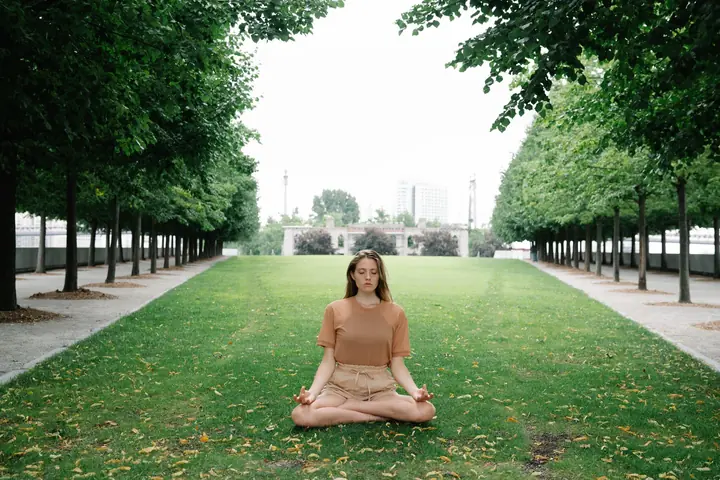 LearnWhat Is Yoga?A clear overview of what yoga is and where it comes from.
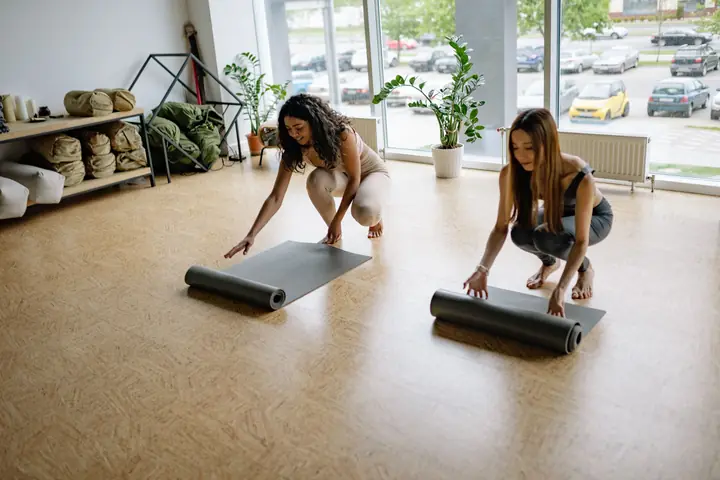 StartBeginner's GuideHow to begin, what to focus on and what to leave for later.
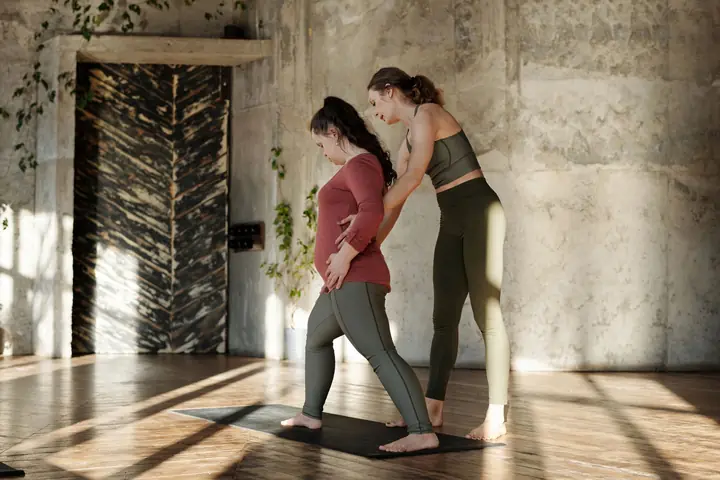 Body & HealthPracticing SafelySimple habits that keep practice sustainable.
Building a home practice
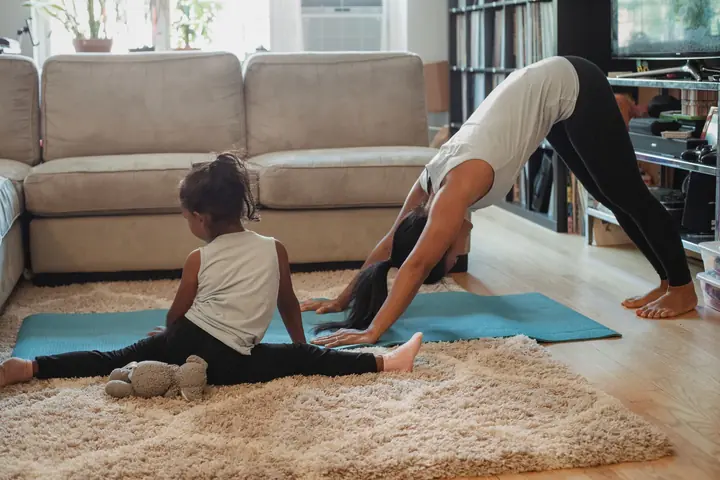 StartPracticing at HomeStructuring short sessions you can keep up.
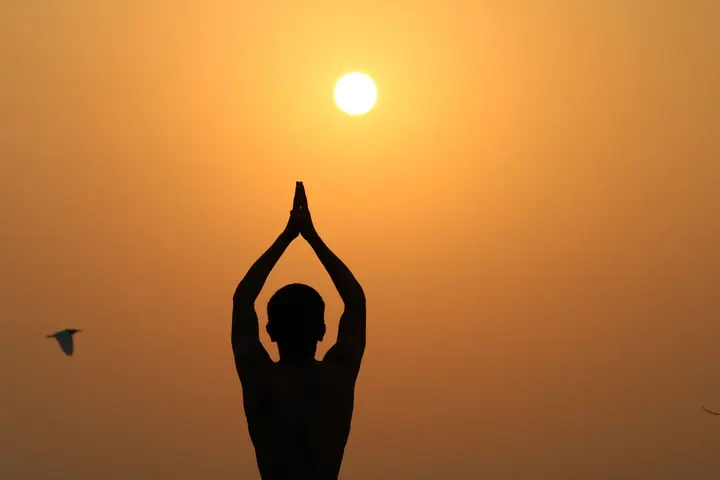 PosesSun SalutationThe flowing sequence at the heart of many classes.
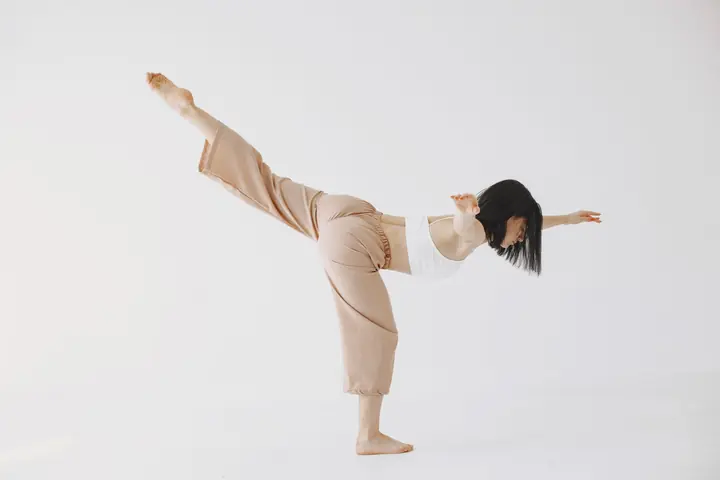 PosesPose LibraryEvery pose in the guide, searchable by type and level.
Going deeper
 LearnPhilosophy & the Eight LimbsThe ideas behind practice, from ethics to meditation.
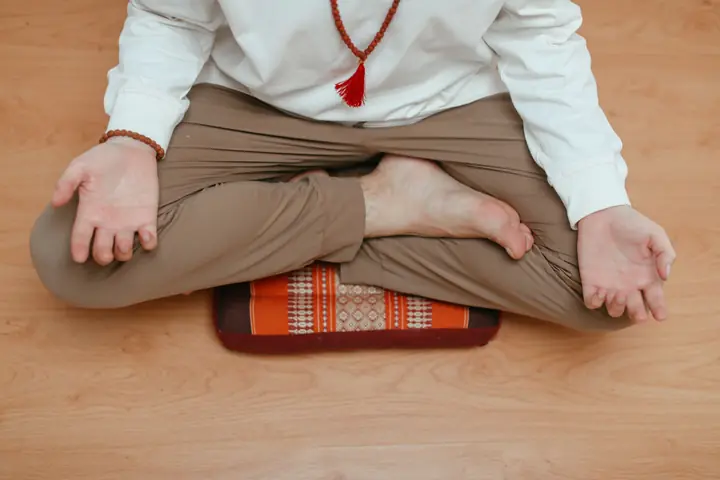 Breath & MindMeditationPractical methods for training attention.
 Body & HealthAnatomy & AlignmentHow the body moves in poses, and why alignment varies.
A note on language and Sanskrit
Pose names in this guide appear first in English, followed by the Sanskrit name. We use unaccented romanization (Virabhadrasana, not the fully marked scholarly form) because that is how most readers will meet these words in classes and books. Sanskrit terms are set in italics the first time they appear on a page, and pose cards include a simple pronunciation guide.
Some poses have more than one Sanskrit name, and some widely used names are modern. Where that matters, we note it. The Sanskrit Glossary explains the roots that make up most pose names, so you can work out unfamiliar ones yourself.
We write in US English and use plain words where possible. When a technical term is the clearest choice, we explain it on first use.
Medical disclaimer
Yoga can complement medical care, but it is not a substitute for diagnosis or treatment. A qualified teacher who can see you in person will also notice things no written guide can. See Practicing Safely for practical guidance.
Corrections
We take errors seriously. If we get a fact, date, translation or instruction wrong, we correct it as soon as we can confirm the problem. Small fixes such as typos are made quietly. Changes that affect meaning, safety advice or a factual claim are corrected in the text itself, and we reconsider related pages that may repeat the same mistake.
Reader reports are one of the most useful ways we find problems. When a correction is suggested, we check it against the sources described above before changing anything, and we are happy to be shown a better source.
Photography
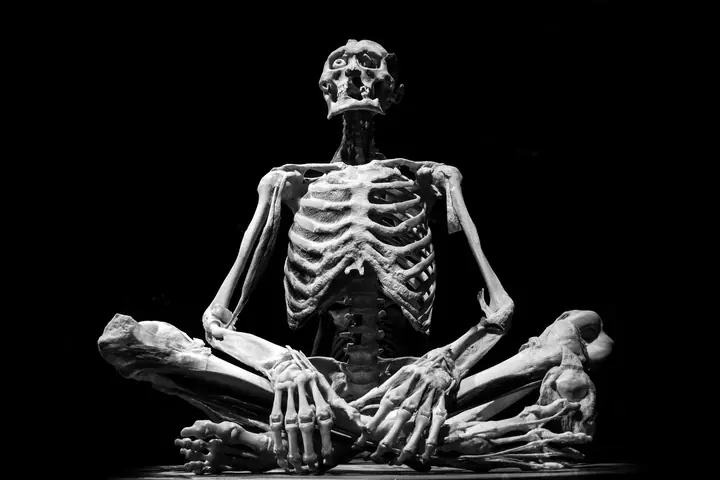
The photographs on this site come from Pexels and are used under the Pexels license. They were chosen for mood and do not demonstrate the instructions on each page. Always follow the written cues on the pose cards. Thank you to the photographers:
- Home: photo by Miriam Alonso
- What Is Yoga?: photo by Kevin Malik
- History of Yoga: photo by Roman Saienko
- Philosophy & the Eight Limbs: photo by Annie Chen
- Styles of Yoga: photo by Yan Krukau
- Beginner's Guide: photo by Yan Krukau
- Your First Class: photo by Vitaly Gariev
- Practicing at Home: photo by Kamaji Ogino
- Mats & Props: photo by Mikhail Nilov
- Pose Library: photo by Gustavo Fring
- Sun Salutation: photo by Mayursinh Parmar
- Standing Poses: photo by Marta Wave
- Seated Poses & Forward Folds: photo by Elina Fairytale
- Balance Poses: photo by Vitaly Gariev
- Backbends: photo by Anna Shvets
- Inversions: photo by Andrea Piacquadio
- Restorative Poses: photo by Anastasia Shuraeva
- Breathwork: photo by Anastasia Shuraeva
- Meditation: photo by Cup of Couple
- Benefits of Yoga: photo by Vlada Karpovich
- Anatomy & Alignment: photo by adrian vieriu
- Practicing Safely: photo by Cliff Booth
- Sanskrit Glossary: photo by Nataliya Vaitkevich
- Questions & Answers: photo by Anete Lusina
- About This Guide: photo by Annushka Ahuja