In short
- In the yoga tradition, meditation grows from concentration (dharana) into sustained, effortless attention (dhyana).
- You can meditate sitting on a cushion, on a chair, lying down or walking. Comfort and alertness matter more than the shape.
- A wandering mind is normal. Noticing that you have wandered and coming back is the practice itself.
- Five to ten minutes a day, done consistently, is a better start than an occasional long session.
Meditation in the yoga tradition
Meditation was part of yoga long before the physical postures became its most visible feature. The Bhagavad Gita describes the meditator sitting steadily in a clean place with the mind held still "like a lamp in a windless place." The Yoga Sutras of Patanjali open by defining yoga itself as the settling of the fluctuations of the mind (chitta vritti nirodha), and much of the text is about how to achieve that.
Patanjali's eight limbs end with three inward stages that he groups together as samyama:
- Dharana, concentration. The mind is held to a single object, such as the breath, a sound or an image. It keeps drifting and is brought back.
- Dhyana, meditation. Attention flows toward the object without interruption. The effort of returning falls away.
- Samadhi, absorption. The sense of a separate observer dissolves into the object of attention.
In practice, nearly everything a beginner does is dharana. That is worth knowing, because it means the constant drifting and returning you experience is exactly what the early stage is supposed to feel like. The stages before these, especially posture and breath regulation, exist partly to make sitting still possible. See Philosophy & the Eight Limbs for the full framework, and Breathwork for the breath practices that often precede meditation.
Modern meditation draws on many sources beyond yoga, including Buddhist traditions and secular programs such as mindfulness-based stress reduction. The methods below come from several of these streams, and we note origins where they matter.
How to sit (and alternatives)
The Yoga Sutras ask only that posture be steady and comfortable (sthira sukham asanam). There is no single correct shape. What you want is a position you can hold without pain for the length of the session, with the spine upright enough to stay alert.
On the floor
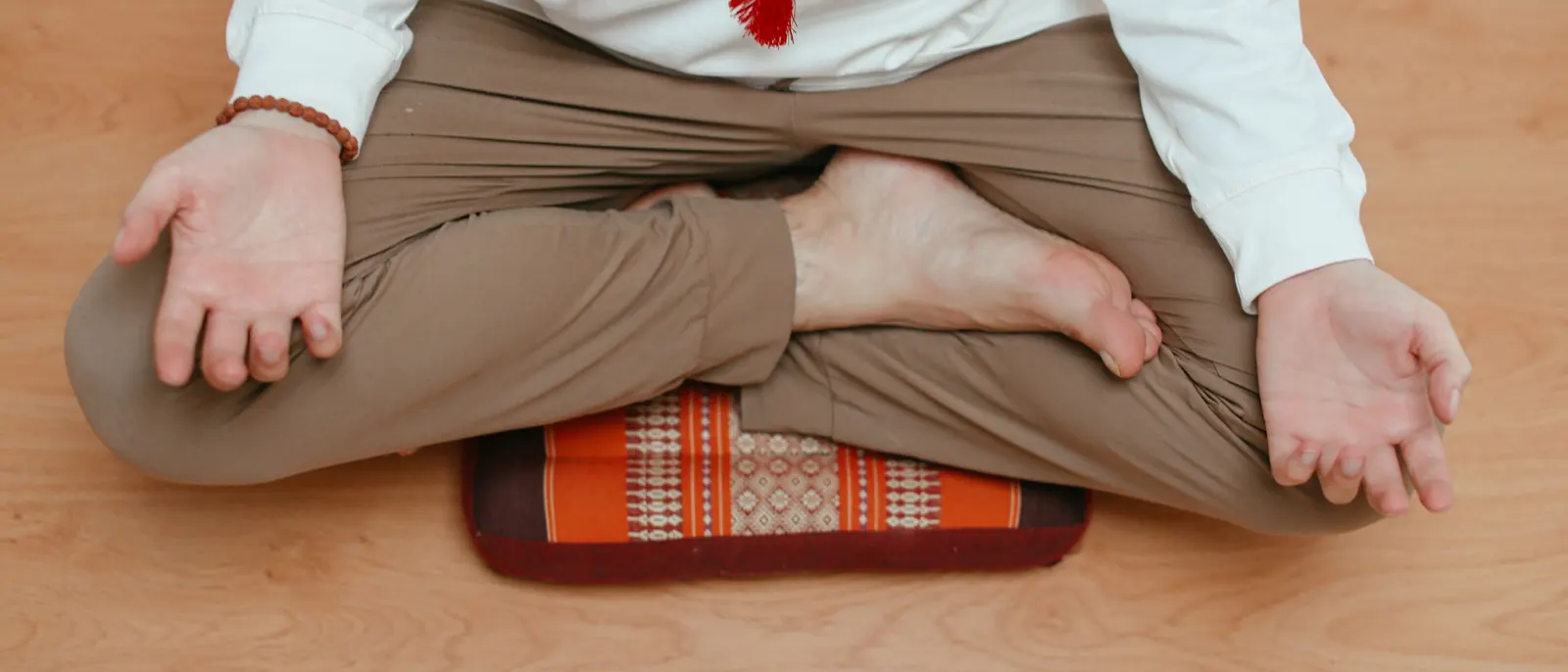
Sit on the front edge of a firm cushion or folded blankets so your hips are higher than your knees. This lets the pelvis tip forward slightly and the spine rise with little effort. Cross the legs loosely as in Easy Pose, or place one heel in front of the other. If your knees float high, put support under them. Full lotus is traditional but not necessary, and forcing it is a common cause of knee injury.
Kneeling
Kneel and sit on a block, a meditation bench or a thick cushion placed between the heels, as in a supported Hero Pose. Many people with tight hips find kneeling easier on the back than cross-legged sitting.
On a chair
Sit toward the front of a firm chair with both feet flat on the floor, hip-width apart. Rest your hands on your thighs. Use the backrest only if you need it. A chair is a completely legitimate choice for any meditation practice.
Lying down
Lying on your back, as in Corpse Pose, works well for body scans and for people with pain or limited mobility. The trade-off is that it is easy to fall asleep. Bending the knees or resting one forearm upright can help you stay awake.
Hands, eyes and face
Rest the hands on the thighs or in the lap. Close the eyes, or keep them half-open with a soft gaze toward the floor a little way ahead. Let the jaw loosen and the tongue rest. Before you begin, take a few breaths to let the shoulders drop and the belly soften.
Six methods to try
Try each for a few sessions before deciding whether it suits you. There is no hierarchy among them, and many people use different methods on different days.
1. Breath counting
Counting breaths gives the mind a simple job and makes drifting easy to spot. This method is found in both yogic and Buddhist traditions.
Settle
Sit comfortably and breathe naturally through the nose for a minute. Do not try to change the breath.
Count exhales
At the end of each exhale, silently count "one." At the end of the next, "two." Continue up to ten.
Start again
After ten, return to one. If you lose count, or find yourself at fourteen, simply start again at one without judgment.
Drop the count
If counting becomes smooth after a few weeks, try letting the numbers go and resting attention on the sensation of breathing itself.
2. Body scan
A body scan moves attention slowly through the body, noticing sensations without trying to change them. It is used widely in mindfulness programs and resembles parts of yoga nidra, a guided relaxation practice.
Get comfortable
Lie down or sit. Take a few slow breaths.
Start at the feet
Bring attention to your toes. Notice temperature, pressure, tingling, or the absence of sensation. Stay for a few breaths.
Move upward
Shift attention step by step through the soles, ankles, calves, knees, thighs, hips, belly, lower back, chest, upper back, hands, arms, shoulders, neck, face and scalp.
Notice without fixing
If you find tension, notice it. It may soften on its own, or it may not. Both are fine.
Finish with the whole body
End by sensing the body as a whole, breathing, for a minute or two.
3. Mantra
A mantra is a sound, word or phrase repeated silently or aloud. Mantra repetition, japa, is one of the oldest forms of meditation in Indian traditions. The syllable Om is the best known; the Yoga Sutras recommend its repetition with reflection on its meaning. You can also use a neutral word such as "peace" or "calm," or a phrase such as "so hum," which is often synchronized with the breath.
Choose a mantra
Pick something short that is easy to repeat. Keep it the same for a few weeks.
Repeat
Repeat it silently at a relaxed pace. You can link it to the breath, for example "so" on the inhale and "hum" on the exhale.
Return when you drift
When you notice you have stopped repeating it, gently start again.
Use a mala if you like
A mala is a string of beads, traditionally 108, used to keep count. Move one bead per repetition. The touch can help anchor attention.
4. Walking meditation
Walking meditation is especially useful if sitting is painful or you feel restless. It is most closely associated with Buddhist traditions, where it often alternates with sitting periods.
Choose a path
Find a quiet stretch of ten to twenty paces, indoors or out.
Stand first
Stand still for a few breaths. Feel your weight through the feet, as in Mountain Pose.
Walk slowly
Walk at about half your normal pace. Notice the lift, movement and placement of each foot.
Turn with attention
At the end of the path, pause, turn slowly, and walk back.
Come back to the feet
When the mind wanders, return attention to the sensation of the feet meeting the ground.
5. Loving-kindness (metta)
Loving-kindness meditation, metta in Pali, comes from Buddhist tradition rather than from yoga texts, though it is now taught widely in yoga settings. Patanjali does recommend cultivating friendliness, compassion, gladness and equanimity (Yoga Sutras I.33), attitudes closely related to the Buddhist brahmaviharas. The practice involves silently offering good wishes to yourself and others.
Begin with yourself
Silently repeat simple phrases such as "May I be safe. May I be healthy. May I be at ease." Say them slowly and mean them as much as you can.
A benefactor
Bring to mind someone who has been kind to you and offer the same phrases to them: "May you be safe…"
A neutral person
Choose someone you see but do not know well, such as a neighbor or shop assistant.
A difficult person
When you feel ready, and only then, include someone you find hard. Start with someone mildly irritating, not someone who has harmed you.
Everyone
Widen the wishes to all people, or all living beings.
If offering kindness to yourself feels difficult, which is common, start with the benefactor and return to yourself later.
6. Trataka (candle gazing)
Trataka is steady gazing at a single point. The Hatha Yoga Pradipika lists it among the cleansing practices. It is a direct exercise in concentration and suits people who find eyes-closed practice hard.
Set up
Place a candle at arm's length, with the flame at eye level, in a room without drafts. A dot on a wall also works.
Gaze
Look at the flame, or the tip of the wick, with a relaxed face. Blink when you need to. Do not strain to keep the eyes open.
Close the eyes
After a minute or so, close the eyes and watch the afterimage until it fades.
Repeat
Repeat two or three times. Keep total sessions short at first.
Working with a wandering mind
Every meditator's mind wanders, including those who have practiced for decades. The difference with experience is that you notice sooner and return with less fuss. A few principles help.
- The return is the rep. Each time you notice you have drifted and come back, you have done the exercise. A session with fifty returns is a good session.
- Note it lightly. Some people find it useful to label the distraction with a single word, such as "planning," "remembering" or "worrying," and then return.
- Skip the commentary. Criticizing yourself for drifting is just another thought. Treat it the same way and come back.
- Make the anchor more vivid. If the breath feels too subtle, count, use a mantra, or open the eyes and try trataka or walking.
- Check the body. Drowsiness often means you need to sit more upright, open the eyes slightly, or practice at a different time. Restlessness can mean you need movement first. A few Sun Salutations before sitting help many people.
- Expect variation. Some days will be calm and some scattered. Neither says anything about your ability.
Building a habit
Consistency matters more than length. The mind seems to respond to regular practice, and a daily habit is far easier to keep when each session is short.
- Attach it to something you already do. Sit after brushing your teeth, before breakfast, or right after your home yoga practice.
- Use the same place. A corner with a cushion that stays out becomes a cue in itself.
- Start small. Five minutes is enough. Increase by a few minutes when it starts to feel easy, not before.
- Plan for missed days. If you miss a day, sit for one minute the next day rather than trying to make up time.
- Try a group or a teacher. Sitting with others, in person or online, adds structure and makes it easier to ask questions.
- Keep a brief note. A line after each session about how it went helps you notice patterns over weeks.
A 7-day starter plan
This plan introduces a different method most days so you can find what suits you. Sessions stay short. Repeat the week, or continue with your favorite methods, gradually adding time.
| Day | Method | Time | Focus |
|---|---|---|---|
| 1 | Natural breath | 5 min | Find a comfortable seat. Simply feel the breath at the nostrils or belly. |
| 2 | Breath counting | 5 min | Count exhales from one to ten. Start again whenever you lose track. |
| 3 | Body scan | 10 min | Lying down. Move slowly from feet to head. |
| 4 | Walking meditation | 10 min | Slow pace, attention on the feet. |
| 5 | Mantra | 7 min | "So" on the inhale, "hum" on the exhale, or a word of your choice. |
| 6 | Loving-kindness | 7 min | Yourself, then a benefactor, then a neutral person. |
| 7 | Your choice | 10 min | Repeat the method you liked best. Note what helped. |
On any day, you can open with two or three minutes of the long-exhale pattern from the breath pacer to settle before you begin.
When meditation can be difficult
Meditation is often presented as purely relaxing, but for some people it brings up uncomfortable experiences. These can include anxiety, sadness, intrusive memories, a sense of unreality, or physical agitation. Such reactions are usually mild and pass, but occasionally they are strong. They are more likely during long or intensive practice, such as silent retreats, and in people with a history of trauma or certain mental health conditions.
A trauma-sensitive approach can make meditation safer and more accessible:
- Keep the eyes open if closing them feels unsafe. Rest the gaze on the floor or on a neutral object.
- Choose external anchors. The sounds in the room, the feel of your feet on the floor, or an object in your hands can feel steadier than internal sensations or the breath.
- Keep sessions short and sit where you can see the door if that helps.
- Move when you need to. Shifting position, opening the eyes or stopping are always allowed. Walking meditation is a good alternative.
- Be selective with body scans. Focusing on certain areas of the body can be distressing. Skip them freely.
Research on meditation, summarized by the U.S. National Center for Complementary and Integrative Health (NCCIH), suggests it may help with stress, anxiety and some aspects of mood, blood pressure and sleep, though study quality varies and the effects are often modest. For more on how to read these findings, see Benefits of Yoga.
 Breath & MindBreathworkPranayama techniques and a guided pacer to settle before you sit.
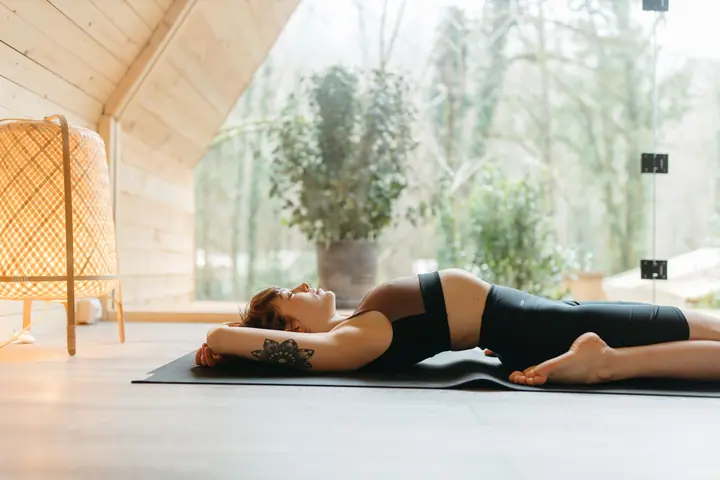 PosesRestorative PosesSupported shapes for deep rest and body awareness.
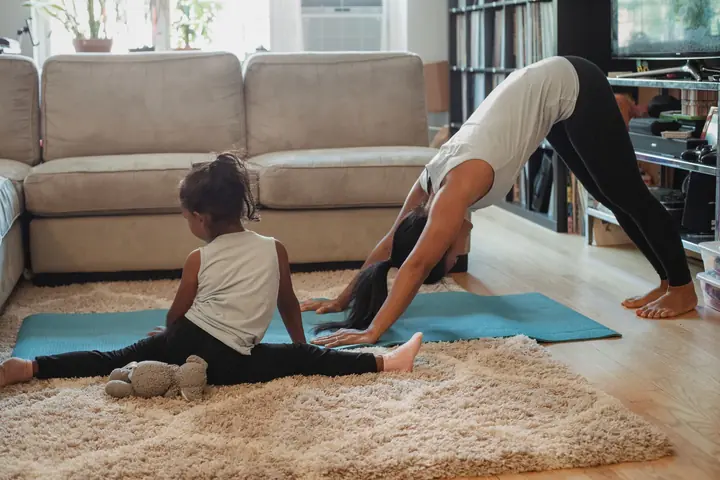 StartPracticing at HomeFitting meditation into a routine that lasts.
Sources & further reading
- Yoga Sutras of Patanjali, especially I.2, I.33, II.46 and book III on dharana, dhyana and samadhi.
- Bhagavad Gita, chapter 6, on the practice of meditation.
- Hatha Yoga Pradipika, chapter II, on trataka.
- U.S. National Center for Complementary and Integrative Health (NCCIH), "Meditation and Mindfulness: What You Need To Know."