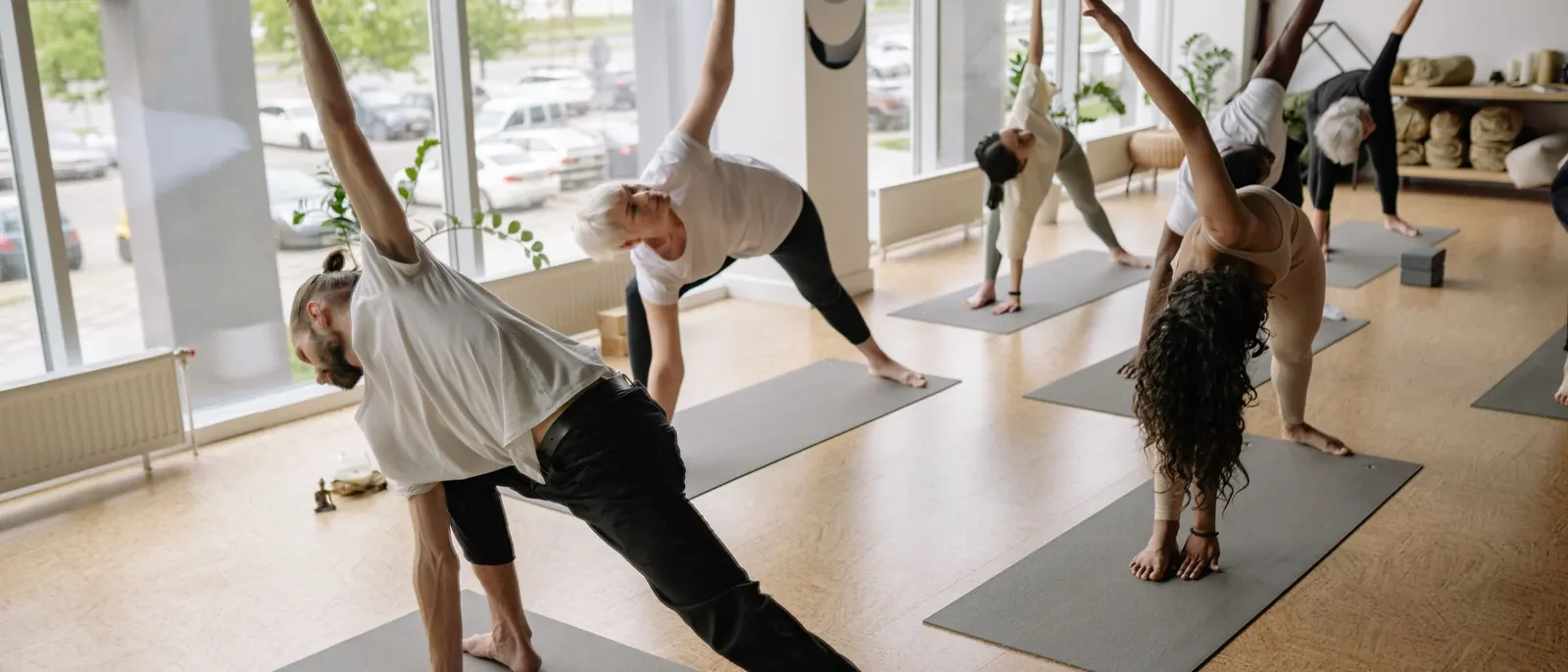
In short
- Nearly all modern styles descend from hatha yoga, and many trace back to T. Krishnamacharya and his students in the twentieth century.
- Flowing styles (Vinyasa, Ashtanga, Power) move quickly and build heat. Alignment styles (Iyengar, many Hatha classes) hold poses and refine them. Slow styles (Yin, Restorative) emphasize stillness and relaxation.
- Beginners usually do well in a gentle Hatha, beginner Vinyasa or Iyengar class.
- The teacher often matters more than the style name. Try a few classes before deciding.
How styles differ
Every style on this page uses postures, breath and attention. What changes is the recipe. When you read a class description, look for these variables:
- Pace. Do poses flow one into the next on each breath, or are they held for many breaths or several minutes?
- Intensity. How much strength, stamina and effort does a typical class ask for?
- Structure. Is the sequence fixed and the same every time, or does the teacher design each class?
- Emphasis. Is the focus on precise alignment, continuous movement, breathwork, relaxation or meditation and chanting?
- Environment. Is the room heated? Are props used extensively?
Style names are not regulated. Two classes called "Hatha" or "Vinyasa" at different studios can feel very different. Some methods, such as Iyengar and Ashtanga, have defined lineages and teacher certification, while others are broad labels. The History of Yoga explains where most of these approaches came from.
Flowing and dynamic styles
Vinyasa
Vinyasa means placing in a special way, and in yoga it refers to linking movement with breath. A Vinyasa class moves from pose to pose with each inhalation or exhalation, often returning to a short linking sequence (plank, low push-up, upward-facing dog, downward-facing dog) between poses. Classes vary widely because teachers create their own sequences, and many build toward a peak pose. Music is common.
Vinyasa grew out of Ashtanga and is now the most common style in many Western studios. It builds strength, stamina and coordination, and the continuous movement can feel meditative. The pace can make careful alignment harder, so beginners should look for classes labeled "beginner," "slow flow" or "level 1." Practicing the Sun Salutation is good preparation.
Ashtanga
Ashtanga Vinyasa yoga was taught by K. Pattabhi Jois in Mysore, India, based on what he learned from Krishnamacharya. It uses set sequences of poses always performed in the same order. There are six series, and most practitioners spend years on the first, the Primary Series, called Yoga Chikitsa ("yoga therapy"). Practice combines three elements: ujjayi breathing (a steady, slightly audible breath), bandhas (energetic locks) and drishti (a set gaze point for each pose).
Ashtanga is taught in two formats. In led classes, the teacher counts the whole group through the sequence. In "Mysore style" classes, each student practices the sequence at their own pace while the teacher gives individual adjustments. Traditionally, practice is six days a week. Ashtanga is physically demanding and builds considerable strength and flexibility. Its fixed structure makes progress easy to see, which some people love. Others find the repetition and intensity hard on shoulders, wrists and lower back without careful teaching. The name borrows Patanjali's "eight limbs" (see Philosophy), though the practice itself centers on posture.
Power yoga
Power yoga emerged in the United States in the 1990s when teachers such as Beryl Bender Birch in New York and Bryan Kest in Los Angeles adapted Ashtanga into a more flexible, fitness-oriented format without the fixed sequence. Classes are vigorous, strength-focused and often fast, with core work, arm balances and sometimes a warm room. It suits people who want a workout and already have a reasonable base of fitness. It usually places less emphasis on meditation, chanting or philosophy.
Hot yoga and Bikram-style
Hot yoga is any class taught in a heated room, commonly between about 80 and 105°F (27 to 40°C). The best known version is the sequence popularized by Bikram Choudhury in the 1970s: 26 postures and two breathing exercises in a fixed order over 90 minutes, in a room heated to about 105°F (40°C) with added humidity. Choudhury later faced serious legal allegations, and many studios now teach the same or similar sequence under generic names such as "hot 26." Other hot classes are simply Vinyasa or Power yoga in a warm room.
Heat makes muscles feel more pliable and makes the session feel intense, and many practitioners enjoy the sweat and focus it brings. It also raises heart rate and the risk of dehydration, dizziness and overstretching, because feeling looser does not mean your tissues can safely go further.
Traditional and alignment-based styles
Hatha
Historically, hatha yoga is the whole medieval tradition of physical practice from which every style on this page descends (see History). On a modern schedule, "Hatha" usually means something narrower: a general class at a moderate or gentle pace, where poses are held for several breaths with pauses between them. Breathing exercises and a short relaxation or meditation are often included.
Because the label is so broad, Hatha classes range from gentle to fairly strong. In general they are a good starting point for beginners, since the slower pace leaves time to learn the basic shapes and to ask questions. Our Beginner's Guide assumes a practice along these lines.
Iyengar
Iyengar yoga was developed by B.K.S. Iyengar, a student of Krishnamacharya, and set out in his book Light on Yoga (1966). It is known for precise alignment, holding poses for longer periods and extensive use of props: blocks, straps, blankets, bolsters, chairs and wall ropes. Props let students experience a pose's alignment even when strength or flexibility is limited, and they allow poses to be adapted for injuries and health conditions.
Classes are detailed and instructional, with less flow and little music. Teachers go through a long, rigorous certification process, which makes Iyengar classes relatively consistent from one teacher to another. The style suits beginners who want to understand how poses work, people who like clear technical teaching and those managing injuries. Standing poses are taught early and thoroughly. See Standing Poses and Anatomy & Alignment.
Viniyoga and therapeutic yoga
Krishnamacharya's later teaching, carried forward by his son T.K.V. Desikachar, emphasized adapting yoga to each individual's age, health, needs and goals. This approach is often associated with the term viniyoga, meaning appropriate application. In the United States, Gary Kraftsow developed it into a structured method. Practice often uses repeated movement into and out of poses coordinated with the breath, adapted postures, breathwork, chanting and meditation, frequently in one-to-one sessions.
Related is the wider field of yoga therapy, in which trained practitioners use yoga to support people with specific health concerns such as back pain, anxiety or recovery from illness. Professional bodies such as the International Association of Yoga Therapists set training standards. Yoga therapy can be a useful complement to medical care but should not replace it. This approach suits people with injuries or chronic conditions, older adults and anyone who wants a practice designed around them.
Slow and restful styles
Yin
Yin yoga uses mostly seated and reclining poses held passively for long periods, typically three to five minutes and sometimes longer. Muscles are relaxed as much as possible, and the aim is to apply gentle, sustained stress to the hips, pelvis and spine. The style took shape in the late twentieth century through Paulie Zink, Paul Grilley and Sarah Powers, and it draws on ideas from Taoist practice and Chinese medicine alongside hatha yoga. Poses often have different names from their hatha equivalents, such as "Butterfly" for a version of Bound Angle.
Yin is often said to target connective tissue and fascia. The detailed physiological claims are debated, but many people find it a calming, introspective complement to more active styles. Long holds can bring up strong sensations. The aim is moderate, tolerable sensation, never sharp or nerve-like pain, and people who are very flexible should avoid sinking passively to the end of their range.
Restorative
Restorative yoga is the most passive style. A class may include only five or six poses, each fully supported by bolsters, blankets and blocks so that no effort is needed to hold it, and each held for five to twenty minutes. The goal is deep rest and relaxation of the nervous system. It grew largely out of Iyengar's use of props, and the teacher Judith Lasater did much to establish it as its own practice.
Restorative yoga differs from Yin in that it seeks comfort and release, not stretching sensation. It suits people who are stressed, fatigued, recovering from illness or injury, or who simply want to rest. It is also a valuable counterbalance for people who train hard. Try it at home with the poses on Restorative Poses.
Prenatal
Prenatal yoga classes are designed for pregnancy. They typically focus on gentle strength, mobility, pelvic floor awareness, breathing techniques useful in labor and relaxation, and they offer a chance to meet other expectant parents. Teachers adapt poses as the pregnancy progresses: avoiding deep twists and closed twists across the belly, strong abdominal work and poses lying on the belly, using support for balance, and replacing lying flat on the back later in pregnancy with side-lying or propped positions.
Research suggests prenatal yoga may help with stress, sleep and some common discomforts of pregnancy, though it does not guarantee any particular outcome. A specialized class is generally a safer choice than a regular class, especially if you are new to yoga.
Kundalini
Kundalini yoga, as taught in most studios, was brought to the United States in 1969 by Harbhajan Singh Khalsa, known as Yogi Bhajan. It combines dynamic breathing techniques such as "breath of fire" (rapid, rhythmic breathing from the belly), repetitive movements, held postures, chanting of mantras and meditation, organized into set sequences called kriyas. Many practitioners wear white, and classes often open with a specific chant. The style takes its name from kundalini, a concept from tantric and hatha yoga describing a latent energy at the base of the spine.
Kundalini classes feel quite different from posture-focused styles. They can be energizing and meditative, and strength or flexibility matters less than willingness to try unfamiliar practices. In 2020, an investigation commissioned by an organization within the community reported that Yogi Bhajan had abused students, which led to reassessment within Kundalini communities. Some teachers now present the practices separately from his persona.
Styles compared
These are typical characteristics. Individual teachers and studios vary, sometimes a lot.
| Style | Pace | Intensity | Heat | Best for |
|---|---|---|---|---|
| Hatha | Slow to moderate | Low to moderate | No | Beginners; learning the basics; a balanced all-round practice |
| Vinyasa | Moderate to fast, flowing | Moderate to high | Sometimes warm | Variety, cardio and strength, people who like movement and music |
| Ashtanga | Fast, fixed sequence | High | No (body heat builds) | Disciplined practitioners who like routine and measurable progress |
| Iyengar | Slow, long holds | Moderate | No | Precise alignment, injuries, learning technique, prop use |
| Yin | Very slow, passive holds of minutes | Low (strong sensation possible) | No | Complementing active training, introspection, flexibility |
| Restorative | Very slow, fully supported | Very low | No | Stress, fatigue, recovery, deep relaxation |
| Kundalini | Varied, repetitive | Low to moderate | No | Breathwork, chanting and meditation |
| Hot / Bikram-style | Moderate, often fixed sequence | Moderate to high | Yes, up to about 105°F (40°C) | Healthy people who enjoy heat and a predictable routine |
| Power | Fast | High | Sometimes | Fitness-focused practitioners, athletes |
| Viniyoga / therapeutic | Slow, adapted | Low to moderate | No | Injuries, chronic conditions, older adults, individual needs |
| Prenatal | Slow | Low to moderate | No | Pregnancy, with your care provider's approval |
How to choose a style
Start with what you want from practice and what your body needs now. These questions narrow the field quickly.
Consider your starting point
If you are new to exercise or to yoga, choose a class labeled beginner, gentle, Hatha or Iyengar. If you are already fit, a beginner Vinyasa class is also reasonable. Skip advanced and heated classes until you know the basic poses. Beginner's Guide covers the first steps.
Decide what you are looking for
For strength and a workout, try Vinyasa, Power or Ashtanga. For technique and understanding, try Iyengar or a slow Hatha class. For stress relief and rest, try Restorative or Yin. For breathwork and meditation, try Kundalini or a class that includes pranayama and meditation.
Account for health and life stage
With an injury, chronic condition, or during pregnancy, look for Iyengar, therapeutic or prenatal classes, tell the teacher before class and consult your doctor where appropriate. See Practicing Safely.
Try more than one
Take at least two or three classes in a style, ideally with different teachers, before judging it. First classes feel awkward in almost any style. Your First Class explains what to expect.
Mix and match over time
Many people combine styles, for example a vigorous class during the week and Yin or Restorative at the weekend. Balancing effort and rest fits the principle of steady, comfortable practice described in the Philosophy page.
Common questions
Which style is best for beginners?
Gentle Hatha, beginner-level Vinyasa and Iyengar classes are the most common recommendations, because they move slowly enough to learn the poses safely. Look for "beginner," "level 1" or "fundamentals" in the class description.
Which style is best for flexibility?
Any regular practice can improve flexibility. Yin and Iyengar use longer holds that many people find effective. Balance flexibility work with strength, which Vinyasa and Hatha classes provide.
Is hot yoga better for weight loss?
You sweat more in a heated room, but much of the weight lost during class is water that returns when you rehydrate. Any regular, moderately vigorous practice combined with other healthy habits can support weight management. Choose hot yoga because you enjoy it, and take the precautions above.
What is the difference between Yin and Restorative?
Both are slow and passive. Yin seeks a moderate stretching sensation held for several minutes, often with little support. Restorative uses props to support the body completely so there is little or no stretch, aiming for deep relaxation.
Can I practice at home instead of going to a class?
Yes, though a few classes with a qualified teacher first are helpful for learning the basics safely. Practicing at Home offers sequences and advice for building a home routine.
Continue reading
 StartYour First ClassWhat to bring, what to wear and what happens in a typical class.
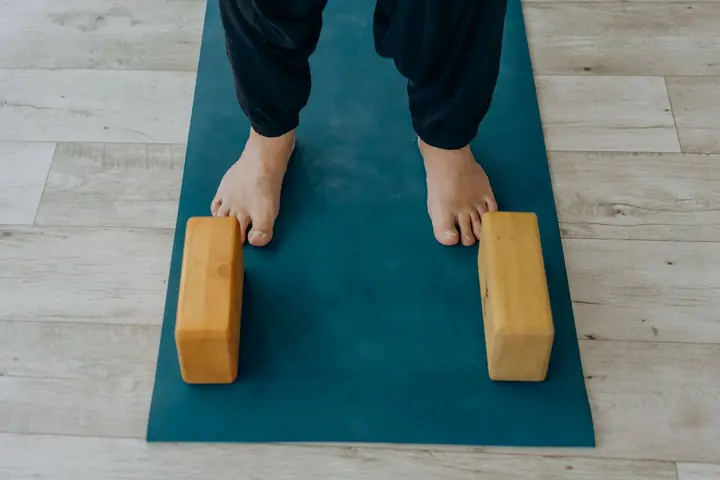 StartMats & PropsThe blocks, straps and bolsters used in Iyengar, Yin and Restorative classes.
 Body & HealthBenefits of YogaWhat research suggests about yoga's effects, and where evidence is limited.
 PosesPose LibraryEvery pose in this guide, searchable by category and level.