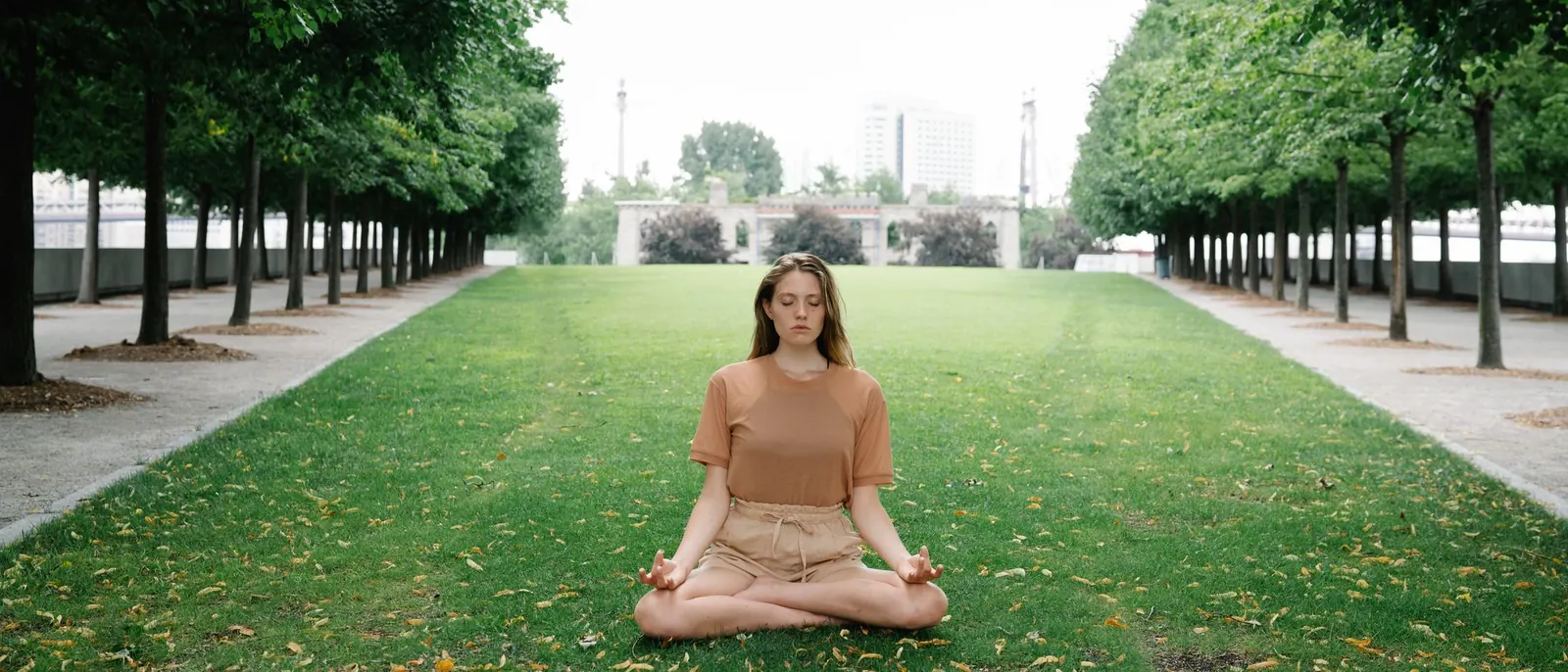
In short
- The word yoga comes from the Sanskrit root yuj, meaning to yoke, join or harness. Classical texts use it for disciplined practice aimed at a steady, clear mind.
- Traditional yoga includes ethics, breathing, concentration and meditation. Physical postures (asana) became the center of practice mainly in the twentieth century.
- Indian tradition describes several paths: raja (meditation), hatha (body and breath), karma (action), bhakti (devotion) and jnana (knowledge).
- You do not need to be flexible, young, fit or religious to practice. You need a willingness to pay attention.
The word "yoga"
Yoga is a Sanskrit word built on the verbal root yuj. The root means to yoke or harness, the way a driver yokes horses to a chariot. The same Indo-European root gives English the word "yoke" and Latin iugum. From that concrete image came two broad senses that run through Indian literature.
The first sense is discipline. To practice yoga is to harness the senses and the mind, which older texts often compare to restless horses. The Katha Upanishad uses exactly this chariot image: the body is the chariot, the senses are the horses, and the mind is the reins. Yoga is the skill of holding the reins steady.
The second sense is union or connection. Many later traditions describe yoga as the joining of the individual self with a larger reality, however that reality is understood. Modern teachers often translate yoga simply as "union," and that is a fair reading of some schools, but it is not the only one. Patanjali's Yoga Sutras, the most influential classical text, defines yoga more austerely as the stilling of the movements of the mind (sutra 1.2). For Patanjali, the goal is closer to separation: the clear recognition that pure awareness is distinct from the changing contents of the mind. We look at that idea on the Philosophy & the Eight Limbs page.
The word also has ordinary uses in Sanskrit. It can mean a method, a combination, an application or a conjunction of planets in astrology. When you see "yoga" in a classical text, context tells you which sense is meant.
More than postures
If your picture of yoga is a room of people on mats moving through Downward-Facing Dog, you are seeing one recent and very visible part of a much older tradition. For most of yoga's recorded history, the central practices were ethical restraint, breath control, concentration and meditation. Posture mattered mainly as a way to sit comfortably and steadily for long periods.
The Yoga Sutras, usually dated to somewhere around the early centuries of the common era, mention asana in only a handful of verses. The key line says simply that posture should be steady and comfortable (sthira sukham asanam, 2.46). Medieval hatha yoga texts added a small number of named postures along with breathing techniques, seals and cleansing practices. The large repertoire of flowing, athletic poses taught in most studios today took shape largely in India and the West during the twentieth century, drawing on hatha yoga, Indian wrestling and exercise traditions, and European physical culture. The historian Mark Singleton traces this development in Yoga Body (2010). The History of Yoga page covers it in more detail.
None of this makes modern postural practice less legitimate. It means yoga has always changed shape as it moved between teachers, regions and centuries. A complete picture of yoga usually includes several strands working together:
- Ethics and conduct. Guidelines such as non-harming (ahimsa), truthfulness and contentment, which shape how you treat others and yourself.
- Posture. Physical shapes that build strength, mobility and steadiness, and prepare the body for sitting still. See the Pose Library.
- Breath. Awareness and regulation of breathing, called pranayama. See Breathwork.
- Attention. Withdrawing from distraction, concentrating on one point and meditating. See Meditation.
- Study and reflection. Reading, listening and examining your own habits of mind.
The main paths of yoga
Indian tradition does not treat yoga as a single method. Different texts describe different paths suited to different temperaments. The classic list of four paths (karma, bhakti, jnana and raja) was popularized in the West by Swami Vivekananda in the 1890s, drawing heavily on the Bhagavad Gita. Hatha yoga is usually added as a fifth because of its importance for modern practice. These paths overlap, and most traditions combine them.
Raja yoga: the path of meditation
Raja means king, and raja yoga is often called the "royal" path. The term came to refer to the meditative system of Patanjali's Yoga Sutras, with its eight limbs: ethical restraints, personal observances, posture, breath regulation, sense withdrawal, concentration, meditation and absorption. Raja yoga treats the mind as the main field of work. Its methods are systematic and fairly psychological: notice how the mind moves, understand what disturbs it, and train it toward stillness.
Hatha yoga: the path of body and breath
Hatha literally means force or effort. Hatha yoga developed in medieval India, especially among ascetic groups such as the Nath tradition, and is described in texts such as the Hatha Yoga Pradipika (fifteenth century) and the Gheranda Samhita (usually dated to the seventeenth or eighteenth century). It uses the body and breath as tools for steadying the mind: postures, breath control, cleansing techniques, energetic seals and locks. The Hatha Yoga Pradipika presents hatha yoga as a preparation for raja yoga. Nearly every style taught in modern studios descends in some way from this path.
Karma yoga: the path of action
Karma means action. Karma yoga, taught most famously in the Bhagavad Gita, is the practice of doing your work and duties well while letting go of attachment to the results. The Gita's argument is that action itself does not bind a person; clinging to the fruits of action does. In practice, karma yoga looks like service, doing a job carefully for its own sake, and acting without constant calculation of personal gain. It is the most portable path, because it can be practiced anywhere.
Bhakti yoga: the path of devotion
Bhakti means devotion or loving participation. Bhakti yoga directs emotion toward the divine, in whatever form a tradition honors, through prayer, chanting, song, ritual and remembrance. The Bhagavad Gita also gives bhakti a central place, and devotional movements shaped religious life across India for centuries. In modern yoga settings, the most visible trace of bhakti is kirtan, communal call-and-response chanting.
Jnana yoga: the path of knowledge
Jnana (pronounced roughly "gyah-nuh") means knowledge or insight. Jnana yoga is the path of inquiry and discernment, closely associated with the Upanishads and the Vedanta philosophical tradition. Its practitioners study texts, reflect deeply and ask what the self really is. The traditional sequence is listening to teaching, reflecting on it and then meditating on it until understanding becomes direct experience. It suits people who are drawn to questions more than to ritual or movement.
What a modern class involves
Most people meet yoga through a group class at a studio, gym or community center, or through an online video. Classes vary a lot by style and teacher (see Styles of Yoga), but a typical general class of 60 to 75 minutes follows a recognizable arc.
Arriving and settling
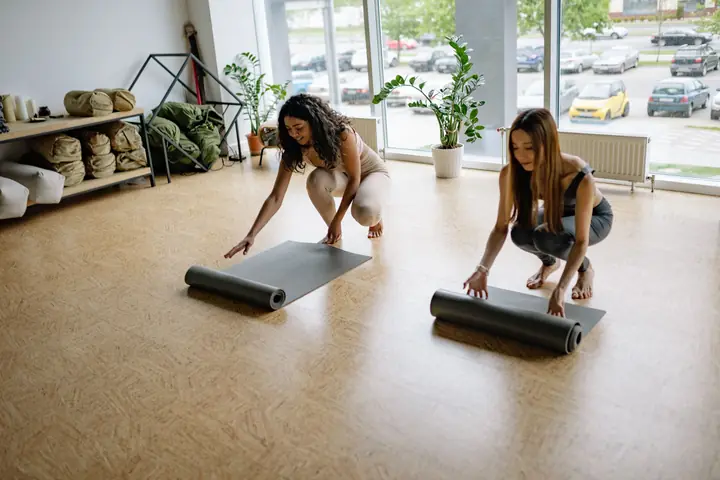
You lay out a mat and any props the teacher suggests. The class often begins seated or lying down, with a few minutes of quiet breathing to shift attention from the day into the room. Some teachers open with a brief chant, such as a single "om," which you are free to skip.
Warming up
Gentle movements loosen the spine, hips and shoulders. Many classes use a Sun Salutation or a simpler version of it to raise body heat and link movement to breath.
Standing and balancing poses
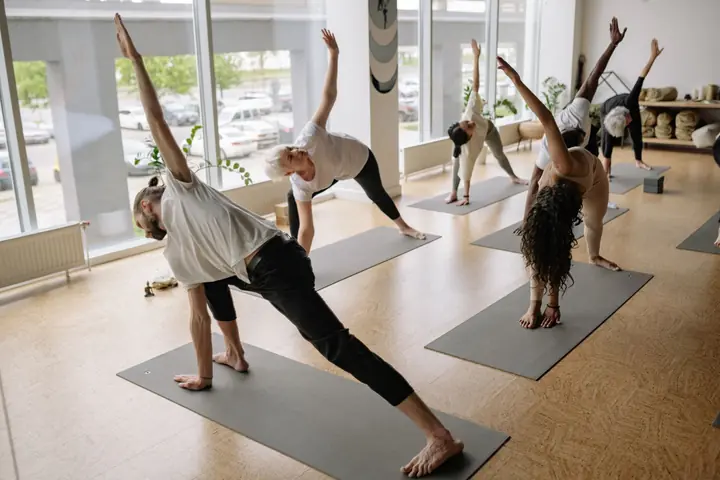
The middle of class usually builds strength and stability with standing poses such as Warrior II and Triangle, then balance poses such as Tree.
Floor work
The class moves to the floor for seated poses and forward folds, gentle backbends, twists and sometimes inversions. Intensity usually tapers from here.
Rest
Almost every class ends with several minutes lying still in Corpse Pose (Savasana). It counts as part of the practice, and it gives the nervous system time to settle after effort.
Throughout, the teacher will cue breath, alignment and attention. A good teacher offers variations for different bodies and makes it clear that you can rest at any time. If you are going for the first time, Your First Class explains what to bring, what to wear and what the etiquette usually is.
Common myths about yoga
Many people put off trying yoga because of assumptions that do not hold up. These are the ones teachers hear most often.
"I'm not flexible enough"
This is the most common reason people give for avoiding yoga, and it gets the relationship backwards. Flexibility can be a result of practice. It is not a requirement to begin. Many poses have simpler versions, and props such as blocks and straps bring the floor closer. Flexibility also varies with genetics, age and joint structure, so two people with equal dedication will look very different in the same pose. That is expected and fine. Stiff beginners often benefit more than naturally flexible ones, who sometimes need to work on strength and control instead. See Mats & Props and Anatomy & Alignment.
"Yoga is a religion"
Yoga grew up inside Indian religious and philosophical traditions, and it has deep roots in Hindu, Buddhist and Jain thought. It is not itself a religion with a creed, a single scripture or required beliefs. Patanjali's Yoga Sutras mentions devotion to Ishvara, a special kind of self or teacher, as one helpful practice among several, and leaves its interpretation fairly open. People of many faiths, and of none, practice yoga. Most modern classes are secular in content, though some include chanting or Sanskrit terms. It is respectful to learn where these come from, and it is also fine to participate only in the parts you are comfortable with.
"Yoga is just stretching"
Many postures do lengthen muscles, but a well-rounded practice also builds strength, balance, coordination and endurance. Holding Chair Pose or moving through repeated Sun Salutations is real muscular work. Beyond the physical, breath regulation and focused attention are central to what makes yoga distinct from a general stretching routine.
"Yoga is only for women" or "only for the young"
The historical figures of classical and medieval yoga in India were overwhelmingly men, and the teachers who shaped modern yoga included both men and women. Today, people of every gender and age practice. Chair yoga, gentle and restorative classes exist for older adults and people with limited mobility, and vigorous styles attract athletes. Pick a class level that matches where you are now.
"Yoga is always gentle and safe"
Yoga is generally considered a low-risk activity when practiced sensibly, but it is still physical exercise. Injuries happen, most often from forcing depth, comparing yourself to others or ignoring pain. Wrists, shoulders, lower back, knees and neck are common trouble spots. Moving within your range and working with a qualified teacher reduce the risk. Practicing Safely explains what to watch for.
"Yoga can cure anything"
Yoga is sometimes marketed with sweeping health promises. The evidence is more modest. Research suggests yoga may help with low back pain, stress, sleep quality, balance and general well-being, and the U.S. National Center for Complementary and Integrative Health summarizes these findings on its yoga pages. Yoga is not a cure for disease and should not replace medical care. The Benefits of Yoga page looks at what the research does and does not show.
What yoga asks of you
Stripped of its styles and vocabulary, yoga asks for a few simple things. The first is regularity. Short, frequent practice tends to do more than occasional long sessions; many teachers suggest starting with two or three sessions a week, even if some are only fifteen minutes. The second is attention. Noticing your breath, the sensations in your body and the habits of your mind is the thread that turns exercise into yoga. The third is honesty. That means working at the edge of what you can do without forcing, and being truthful with yourself about what you feel.
Patanjali pairs these ideas in two words: abhyasa, steady practice over a long time, and vairagya, letting go of attachment to results. Practice consistently, and hold outcomes lightly. That advice works as well for a stiff beginner as it did for a medieval ascetic.
Yoga is the stilling of the fluctuations of the mind.
Where to go next
If you are new, the Beginner's Guide is the best next step. If you want the background first, read about yoga's history and philosophy. If you already know you want to try a class, compare styles to find one that suits you.
 StartBeginner's GuideHow to start practicing, how often, and what to focus on in your first months.
 LearnStyles of YogaHatha, Vinyasa, Iyengar, Yin and more, compared side by side.
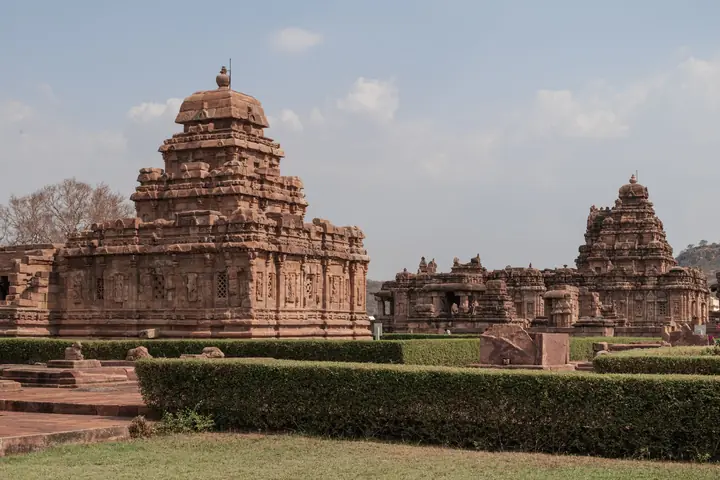 LearnHistory of YogaFrom the Upanishads to the modern studio, with honest notes on dating.
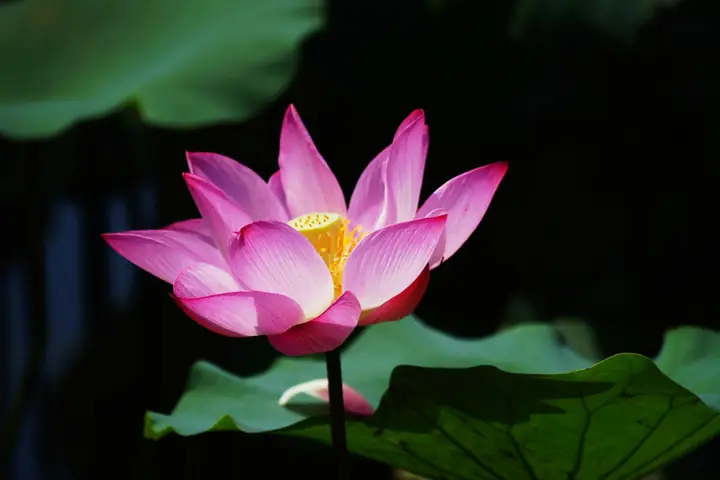 LearnPhilosophy & the Eight LimbsPatanjali's eight limbs, the yamas and niyamas, and how to use them today.
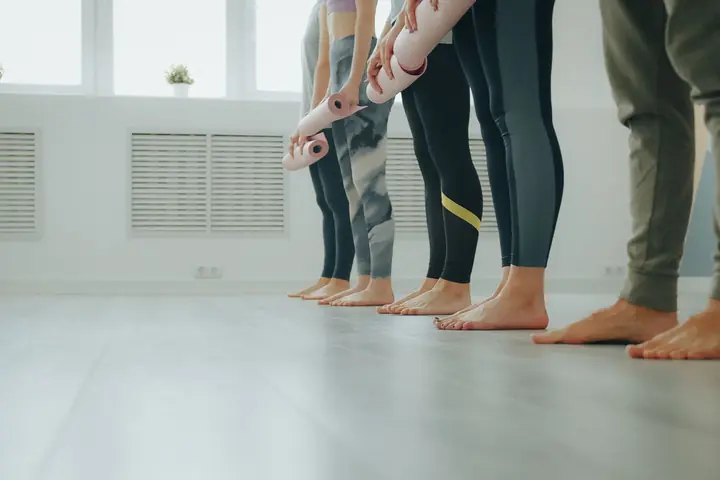 StartYour First ClassWhat to bring, what to expect and how to talk to the teacher.
 ReferenceSanskrit GlossaryPlain definitions and pronunciations for the terms you will hear in class.
Sources & further reading
- Patanjali, Yoga Sutras. Many translations exist; Edwin F. Bryant's The Yoga Sutras of Patanjali (2009) includes extensive commentary.
- Bhagavad Gita, especially the chapters on karma, jnana and bhakti yoga.
- Katha Upanishad, for the chariot image of the senses and mind.
- Svatmarama, Hatha Yoga Pradipika.
- Mark Singleton, Yoga Body: The Origins of Modern Posture Practice (2010).
- U.S. National Center for Complementary and Integrative Health (NCCIH), pages on yoga and its health effects.