In short
- Pranayama is the yogic practice of regulating the breath. It is the fourth of Patanjali's eight limbs.
- Most techniques work by slowing the breath, lengthening the exhale, or changing where and how air moves.
- Start with gentle methods such as three-part breath and a long exhale. Leave forceful breathing and long retentions until you have a steady base and, ideally, a teacher.
- Stop any technique that makes you dizzy, anxious or short of breath, and return to easy natural breathing.
What pranayama is
The Sanskrit word pranayama is usually read as prana (breath, or the vital energy that breath carries) joined with ayama (extension or restraint). Some commentators split it instead as prana plus yama (control). Both readings point to the same practice, which is the deliberate shaping of the breath.
In the Yoga Sutras of Patanjali, pranayama is the fourth of the eight limbs, placed after posture (asana) and before the inward-turning limbs that lead to meditation. Patanjali says little about technique. He describes regulating the inhale, the exhale and the pause between them, and making the breath long and subtle. The detailed methods most teachers use today come largely from later hatha yoga texts, above all the Hatha Yoga Pradipika (usually dated to the fifteenth century), which names eight classical breath practices and warns repeatedly that they should be learned gradually. You can read more about this framework on the Philosophy & the Eight Limbs page.
In a modern class, breathwork shows up in two ways. First, as the breath that accompanies movement, where you inhale into opening shapes and exhale into folding or twisting ones. Second, as seated practice on its own, often at the end of a session before meditation. This page is mostly about the second, though everything here will improve the first.
How breathing works
A little anatomy makes every technique easier to understand and safer to practice.
The diaphragm
The diaphragm is a dome-shaped sheet of muscle and tendon that separates the chest from the abdomen. It attaches around the lower ribs, the tip of the breastbone and, through two tendinous "legs" called the crura, to the front of the lumbar spine. When it contracts, the dome flattens and moves down. That enlarges the chest cavity, lowers the pressure inside the lungs, and air flows in. When it relaxes, the dome rises and the elastic lungs recoil, pushing air out. In quiet breathing the exhale is largely passive.
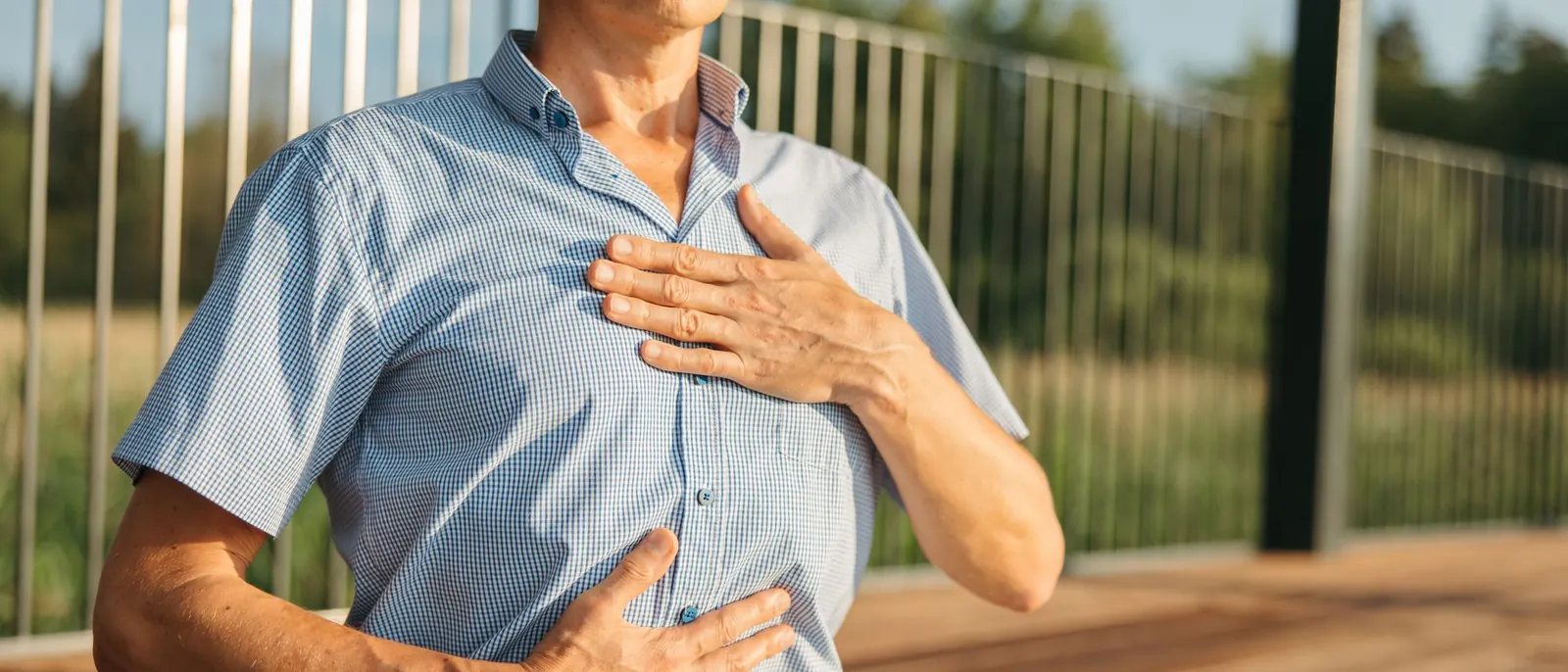
As the diaphragm descends it presses on the abdominal organs, so the belly moves outward. This is why relaxed breathing is often called "belly breathing," even though no air enters the abdomen. As the breath deepens, the lower ribs also widen to the sides and back, and at the fullest inhale the upper chest lifts slightly.
The supporting muscles
The intercostal muscles between the ribs help expand and stabilize the rib cage. During heavy or anxious breathing, accessory muscles in the neck and shoulders, such as the scalenes and sternocleidomastoid, join in to lift the upper ribs. Many people under stress breathe this way all the time: fast, shallow and high in the chest. A forceful exhale recruits the abdominal muscles, which is what happens in coughing, and deliberately in kapalabhati.
Breath and the nervous system
Breathing is unusual among body functions because it runs automatically yet can be taken over at will. Heart rate rises slightly on each inhale and falls on each exhale, a normal pattern called respiratory sinus arrhythmia. Slow breathing, particularly with a longer exhale, tends to amplify this rhythm and is associated with a shift toward the parasympathetic, "rest and digest" side of the nervous system. That is the basic rationale behind most calming breath practices. Fast, forceful breathing tends to do the opposite and feels activating.
Nose or mouth
Unless a technique says otherwise, yoga breathing is done through the nose. The nose warms, humidifies and filters air, and its narrower passages naturally slow the breath down. If your nose is blocked, breathe gently through the mouth and choose techniques that do not depend on nostril control.
Try it now
Sit comfortably, let your shoulders drop, and choose a pattern below. The circle expands as you inhale and contracts as you exhale. Breathe through your nose if you can, and keep the effort low. A few minutes is enough.
The pacer offers four patterns. Box breathing uses four equal counts of inhale, hold, exhale and hold. 4-7-8 pairs a short inhale with a long hold and a longer exhale. Coherent breathing slows you to about five and a half breaths a minute with no pauses. Long exhale simply makes the out-breath longer than the in-breath. To be clear, these are modern breathing patterns developed or popularized in recent decades by clinicians, breathing coaches and researchers. They are not classical pranayama, though they share its core principles of slowing down and extending the exhale, and they are a friendly place to begin.
Before you begin
A few conditions make every technique on this page work better.
- Sit upright with support. A cushion or folded blanket under the hips helps the pelvis tilt forward slightly so the spine can rise without effort. A chair is completely fine. See Easy Pose and Mats & Props for setup ideas.
- Practice on an empty or light stomach. Traditional texts insist on this, and it matters most for abdominal techniques.
- Start with natural breath. Spend a minute simply observing the breath before changing it.
- Keep it short at first. Three to five minutes of a single technique is a complete practice.
- End with rest. Let the breath return to normal for a minute, or lie down in Corpse Pose.
Three-part breath (dirga)
Dirga pranayama (dirga means "long") teaches you to fill the lungs fully and in sequence: abdomen, lower ribs, then upper chest. It is the usual starting point for beginners because it builds awareness of how the whole torso moves.
Lie down or sit
Lying on your back with knees bent is easiest the first time. Place one hand on your belly and the other on your upper chest.
Breathe into the belly
Inhale slowly through the nose and let the belly rise under your lower hand. Exhale and let it fall. Repeat a few times.
Add the ribs
Move your hands to the sides of the lower ribs. Inhale into the belly, then continue the breath so the ribs widen into your hands. Exhale gently.
Add the chest
Inhale belly, ribs, then let the upper chest lift slightly under the collarbones. Exhale in reverse, from chest to ribs to belly, or simply let everything soften together.
Smooth it out
After a few rounds, stop thinking in three parts and let it become one continuous wave. Continue for three to five minutes.
The aim is fullness without force. If you feel you are gulping air or your shoulders are rising toward your ears, reduce the size of the breath.
Ujjayi (victorious breath)
Ujjayi is often translated as "victorious" or "conquering." You gently narrow the back of the throat, at the glottis, so the breath makes a soft, even sound like distant waves. It is the breath most commonly used during flowing styles such as Ashtanga and Vinyasa, because the sound gives you something steady to follow and makes it obvious when you are straining.
Find the sensation
Breathe out through an open mouth as if fogging a mirror, making a soft "haaa." Notice the slight narrowing at the back of your throat.
Close the mouth
Keep that same gentle narrowing and breathe out through the nose. The sound should continue, quieter.
Add the inhale
Keep the throat slightly narrowed as you inhale through the nose. The inhale sound is usually a little softer.
Keep it even
Aim for equal length and volume on the inhale and exhale. The sound should be audible to you and perhaps a neighbor, not to the whole room.
Common errors are tightening the jaw or face, or making the sound so loud it becomes effortful. If your throat feels scratchy, you are squeezing too hard.
Alternate nostril breathing (nadi shodhana)
Nadi shodhana means "channel cleaning." In yogic physiology the nadis are subtle channels through which prana is said to flow; this is a traditional model, not an anatomical one. In practical terms, the technique slows and evens the breath and requires enough attention to settle a busy mind. Many people find it one of the most calming practices on this page.
The traditional hand position is Vishnu mudra: fold the index and middle fingers of your right hand into the palm, and use the thumb to close the right nostril and the ring finger to close the left. If that is uncomfortable, rest the index and middle fingers on the forehead between the eyebrows instead.
Settle
Sit upright. Rest the left hand in your lap. Exhale completely.
Inhale left
Close the right nostril with your thumb and inhale slowly through the left nostril.
Exhale right
Close the left nostril with your ring finger, release the thumb, and exhale through the right.
Inhale right
Keep the left nostril closed and inhale through the right.
Exhale left
Close the right nostril, release the left, and exhale through the left. This completes one round.
Continue
Repeat for five to ten rounds, finishing with an exhale through the left nostril. Lower the hand and breathe naturally for a few breaths.
Keep the touch light, just enough to close the nostril, and keep your head level rather than tilting toward the hand. Once the pattern is easy, you can lengthen the exhale so it is up to twice as long as the inhale. Traditional versions add a breath hold after the inhale, but that is best learned later and with guidance.
Bhramari (humming bee breath)
Bhramari is named after a type of bee, for the humming sound made on the exhale. It naturally lengthens the out-breath, and the vibration in the head and face is soothing for many people. It is a good technique to try if you find silent breath practices hard to stay with.
Prepare
Sit comfortably and close your eyes. Keep the lips lightly closed, the teeth slightly apart and the jaw soft.
Inhale
Take a slow, comfortable breath in through the nose.
Hum
Exhale through the nose while making a steady, medium-pitched humming sound. Let the hum last as long as is easy.
Repeat
Continue for five to ten breaths, then sit quietly and notice the after-effect.
A common variation is to gently close the ear flaps with the thumbs or index fingers, which makes the sound more internal. Press on the cartilage flap, never into the ear canal.
Sitali and sitkari (cooling breaths)
Sitali and sitkari are traditionally described as cooling practices. Both are among the few techniques in which you inhale through the mouth. The incoming air passes over a moist tongue, and most people notice a distinct cool sensation. They are pleasant after a vigorous practice or on a hot day.
Sitali
Curl the tongue
Stick the tongue out slightly and roll the sides up to form a tube. The ability to do this is partly genetic, so if you cannot, use sitkari instead.
Inhale through the tongue
Draw the breath in slowly through the tube, as if through a straw.
Exhale through the nose
Close the mouth and breathe out slowly through the nose.
Repeat
Continue for five to ten breaths.
Sitkari
Bring the upper and lower teeth lightly together and part the lips. Inhale slowly through the gaps between the teeth, which makes a soft hissing sound, then close the mouth and exhale through the nose. Skip both techniques if you have very sensitive teeth, or if you are in cold, dusty or polluted air. They are also traditionally avoided when you have a cold or low blood pressure.
Kapalabhati (skull-shining breath)
Kapalabhati means "skull shining." Strictly speaking the Hatha Yoga Pradipika lists it among the six cleansing practices (shatkarma) rather than the pranayamas, but it is taught alongside breathwork almost everywhere. It reverses the normal pattern. The exhale is short and active, driven by a quick contraction of the lower abdomen, and the inhale is passive, happening on its own as the belly releases.
Sit tall
Sit upright with a lengthened spine and hands resting on the knees. Take two or three normal breaths.
Find the pump
Place a hand on your lower belly. Exhale sharply through the nose by drawing the belly quickly in and up. Release the belly and let the inhale happen on its own.
Start slow
Do a first round of about ten to twenty pumps at a relaxed pace, roughly one per second. The shoulders, chest and face stay still.
Rest between rounds
After the round, breathe normally for several breaths until you feel completely settled.
Build gradually
Over weeks, not days, you can add a second or third round or slightly increase the pace. More is not better.
A similar practice, bhastrika ("bellows"), uses forceful inhales as well as exhales. It carries the same cautions and is best learned in person.
A note on breath retention
Breath retention, kumbhaka, is central to classical pranayama. The hatha texts treat the breath hold as the real goal of breath practice, and the techniques above as preparation. A hold can come after the inhale (antara kumbhaka) or after the exhale (bahya kumbhaka). Traditional instruction often combines holds with the bandhas, muscular "locks" at the throat, abdomen and pelvic floor.
Short, comfortable pauses, like those in box breathing, are fine for most healthy adults. Long retentions are a different matter. They change blood gases significantly and can cause light-headedness or fainting. Never practice breath holding in or near water, while driving, or standing where a fall could injure you. If you have heart or blood-pressure problems, are pregnant, or have a history of anxiety or panic, avoid long holds, and consult your doctor before experimenting. For anyone, a hold should end before you feel an urgent need to breathe. If the next inhale comes as a gasp, the hold was too long.
What research suggests
Breathing practices have become a popular subject of research, and the findings are encouraging but still preliminary. Studies of slow breathing, often around five to six breaths a minute, suggest it can influence heart rate variability and may help lower blood pressure and feelings of stress in some people. Several yogic breathing techniques have been studied for anxiety, mood and sleep, with promising but mixed results. Many of these studies are small, short, or lack strong control groups, and it is often hard to separate the effect of breathing from the effects of relaxation, attention and expectation.
The U.S. National Center for Complementary and Integrative Health (NCCIH) summarizes the broader picture for yoga, including breathing, as generally safe for healthy people when properly practiced, with some benefits supported by evidence and many questions still open. A reasonable reading is that gentle breathwork is low risk and may help you feel calmer, while claims that particular techniques "detoxify," dramatically boost immunity or cure illness are not supported. For more on how to read yoga research, see Benefits of Yoga.
Cautions
Most gentle breathwork is safe for most people, but it is still a physical practice.
- Dizziness or tingling in the fingers or around the mouth usually means you are overbreathing. Stop, breathe normally and let it pass.
- Anxiety. For some people, paying close attention to the breath increases anxiety rather than easing it. If that happens, keep your eyes open, shorten the practice, or try bhramari or a long exhale instead. Breath holds are the most common trigger.
- Medical conditions. If you have asthma, COPD or another lung condition, heart disease, uncontrolled blood pressure, or are pregnant, talk to your doctor before starting anything beyond gentle, natural breathing. Keep any rescue inhaler nearby.
- Mental health. People with a history of trauma, panic disorder or psychosis may find intensive breathwork destabilizing. Gentle techniques with a teacher who understands this are the safer choice. See when meditation can be difficult.
For broader guidance on practicing with health conditions, see Practicing Safely.
 Breath & MindMeditationSimple methods for steadying attention, many of which begin with the breath.
 LearnPhilosophy & the Eight LimbsWhere pranayama sits in Patanjali's framework.
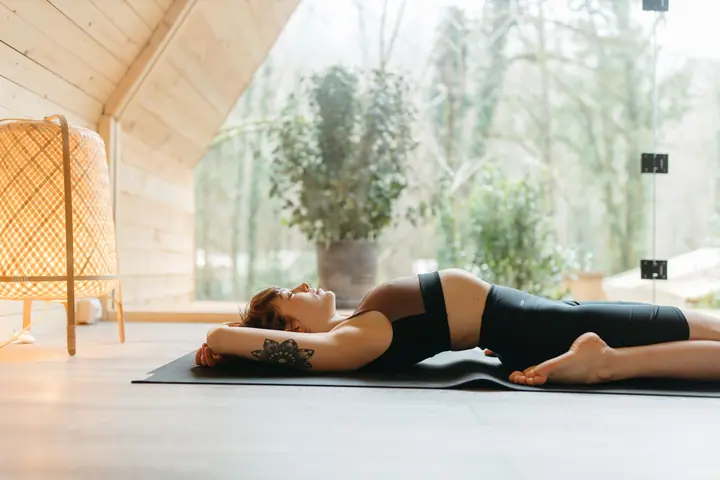 PosesRestorative PosesSupported shapes that make slow breathing easy.
Sources & further reading
- Yoga Sutras of Patanjali, book II, on pranayama as the fourth limb.
- Hatha Yoga Pradipika, chapter II, on pranayama and the cleansing practices.
- B.K.S. Iyengar, Light on Yoga (1966), section on pranayama.
- U.S. National Center for Complementary and Integrative Health (NCCIH), "Yoga: What You Need To Know."