In short
- Choose a class labeled beginner, gentle or level 1, and arrive 10 to 15 minutes early.
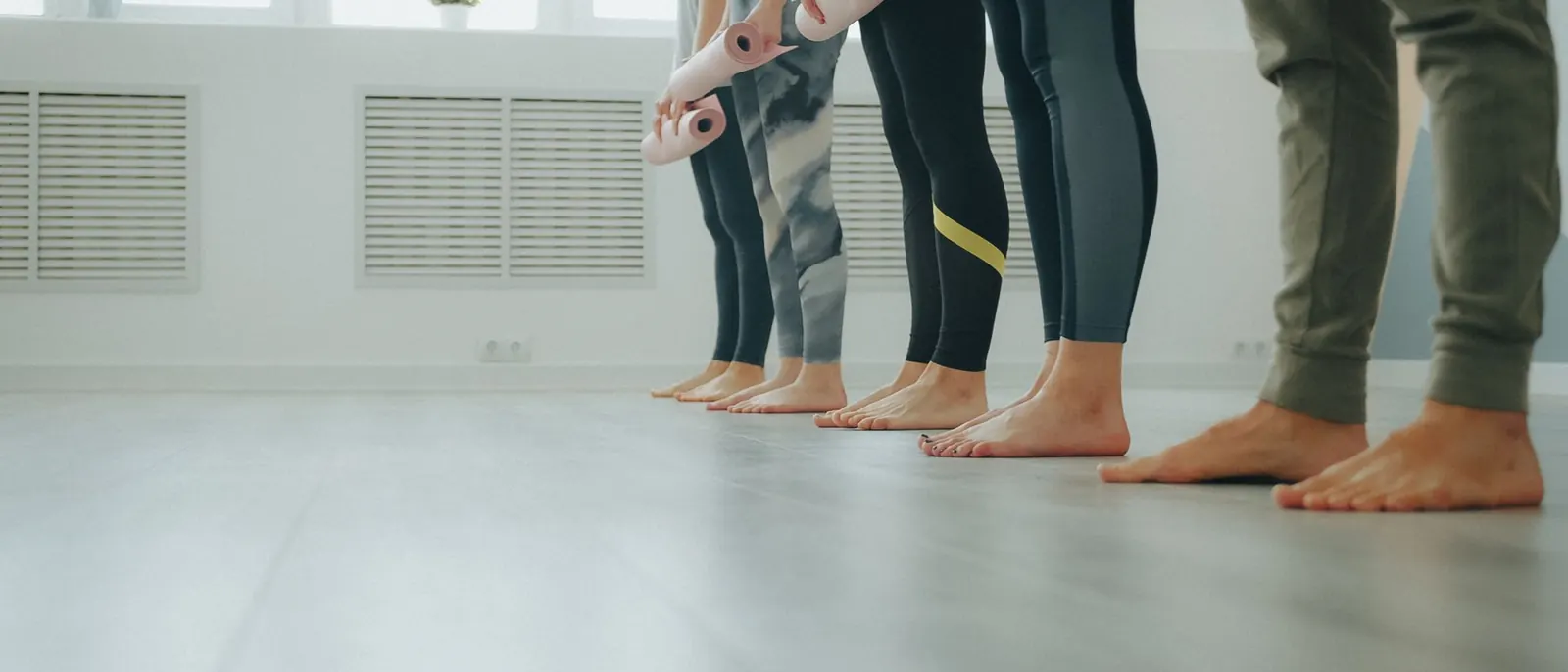
- Wear comfortable, stretchy clothes. You practice barefoot. Most studios lend mats and props.
- Tell the teacher about any injuries, and say whether you are happy to be touched.
- Rest whenever you need to, and stay for the final relaxation.
Choosing a class and teacher
Studio schedules can be confusing. A class called "Vinyasa" at one studio might be gentle and slow, and at another fast and athletic. Read the class descriptions and look for the words beginner, foundations, gentle, intro or level 1. If you cannot tell, call or email the studio and ask which class they recommend for someone who has never practiced. Studios answer this question every day.
For most people, a beginner Hatha or Iyengar class is the safest first choice. Both move at a pace that leaves time for instruction. If you are quite fit and like to move, a slow or level 1 Vinyasa class also works. Heated classes and advanced flows are best left until you know the basic poses. The Styles of Yoga page compares the options, and the Beginner's Guide has a table of good first choices.
Smaller classes are easier for beginners because the teacher can see you. Many studios offer an introductory pass or a beginner course of four to six weeks. A course is worth considering, since each session builds on the one before.
Finding a teacher you trust
Teachers differ in style, experience and training. A good first teacher speaks clearly, demonstrates or describes poses in enough detail to follow, offers easier options without being asked, and checks in about injuries. You should leave feeling you were looked after. If a class felt rushed, competitive or unsafe, try another teacher before giving up on yoga.
What to wear and bring
Wear clothes you can move freely in and that stay in place when you bend forward or lift your legs. Leggings, fitted shorts or soft track pants with a T-shirt or fitted top all work. Very loose tops tend to fall over your face in Downward-Facing Dog. Layers are useful because you may warm up during the active part of class and cool down during relaxation.
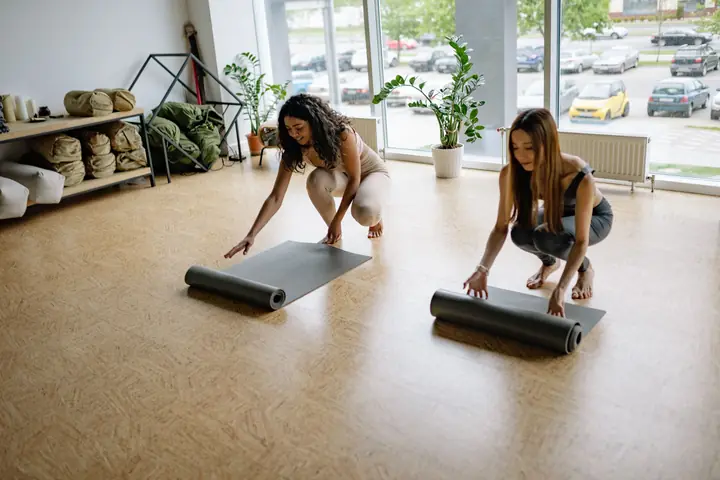
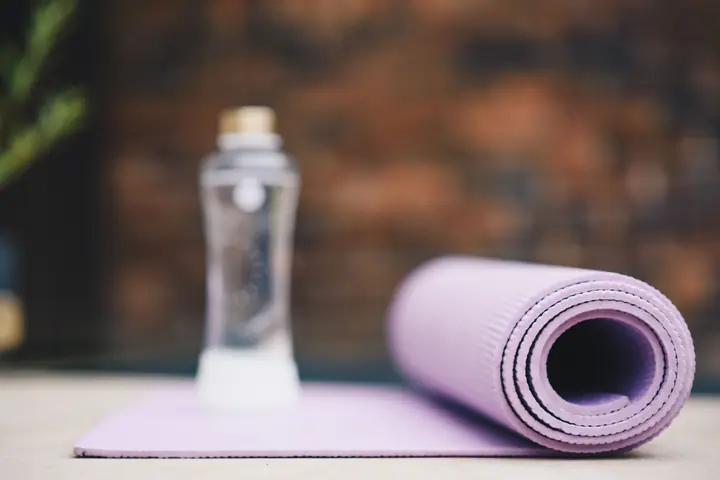
- Mat: most studios have mats to borrow or rent. Some prefer you bring your own. Check ahead. See Mats & Props if you are thinking of buying one.
- Water: a bottle for after class, and for hot classes during it.
- Small towel: helpful in warm rooms or if your hands sweat.
- Hair tie if you have long hair.
- Warm layer or socks for the relaxation at the end.
Leave jewelry that could catch or press into you at home, and avoid strong perfume, since you will be close to other people breathing deeply.
Eating before class
Practicing on a full stomach is uncomfortable, especially in twists and forward folds. Most teachers suggest finishing a large meal two to three hours before class. A light snack such as a banana or a handful of nuts an hour beforehand is usually fine. Drink water through the day rather than a large amount right before you start.
Arriving
Arrive 10 to 15 minutes early for your first class. You may need to fill in a short registration form, which often asks about health conditions. Answer honestly; it helps the teacher keep you safe.
Check in
Tell the front desk it is your first class. They will show you where to go, where to leave shoes and bags, and where the mats and props are kept.
Introduce yourself to the teacher
Say it is your first time and mention any injuries, surgeries, pregnancy or conditions. A quiet word before class is enough. The teacher can then suggest modifications without singling you out.
Choose your spot
A place in the middle or toward the back lets you watch other students if you lose track of an instruction. Being near a wall can be useful for balance poses. Avoid the very front row until you know the routine.
Collect props
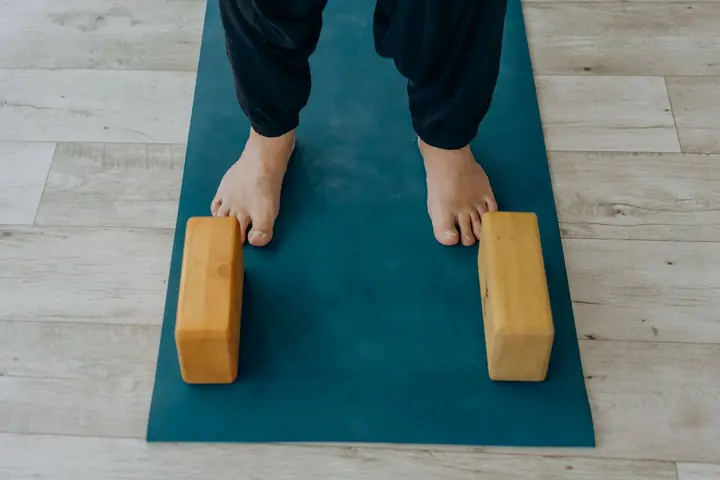
Take what the teacher suggests or what others are taking. Two blocks, a strap and a blanket are typical. Place them beside the top of your mat.
Settle in
Sit or lie quietly on your mat while you wait. Many people use these minutes to notice their breath and let the day settle.
Etiquette
Yoga studios have a few unwritten rules. None of them are complicated, and most come down to consideration for others.
- Shoes: take them off before entering the practice room, and usually socks too. Bare feet grip the mat. Never walk on other people's mats.
- Phones: switch them off or to silent and leave them in your bag or a locker. If you are on call for work or family, tell the teacher and keep the phone face down by the door.
- Talking: keep conversation quiet in the practice room, since some people arrive early to rest.
- Props: return them neatly after class, folded the way you found them. Wipe down borrowed mats if the studio provides spray or cloths.
- Space: in a busy class, set your mat in line with others and leave room to shuffle over for latecomers.
- Hygiene: clean feet and freshly washed clothes are appreciated.
If you are late
Try not to be. If it happens, check the studio's policy; some close the door once class starts. If late entry is allowed, enter quietly, set up at the back, and join in where the class is rather than doing the warm-up you missed. If you arrive during a quiet opening meditation, wait at the door until it finishes.
If you need to leave early
Tell the teacher before class and set up near the door. Leave before the final relaxation begins, so you do not disturb others while they rest.
The typical structure of a class
Classes vary by style, but most beginner classes of 60 to 75 minutes follow a similar arc.
| Part | Typical length | What happens |
|---|---|---|
| Opening | 3–5 min | Sitting or lying quietly, noticing the breath. Some teachers chant Om or share a theme. |
| Warm-up | 10–15 min | Gentle movements such as Cat-Cow, Child's Pose and simple stretches, sometimes a Sun Salutation. |
| Standing poses | 15–20 min | Poses such as Warrior II and Triangle that build strength and heat. |
| Balance, floor and backbends | 10–15 min | Perhaps Tree Pose, Bridge and seated stretches. |
| Cool-down | 5–10 min | Twists, forward folds and hip stretches to slow down. |
| Final relaxation | 5–10 min | Lying in Corpse Pose (savasana). |
Some teachers give instructions in both English and Sanskrit, such as "come into Tadasana" for Mountain Pose. You do not need to know the Sanskrit; watching others will get you through. The Sanskrit Glossary is there if you are curious.
You will also hear cues about the breath, such as "inhale, lift your arms" or "exhale, fold forward." Try to follow them, but if the pace is too quick, breathe at your own rate. The breath matters more than keeping time.
Hands-on adjustments and consent
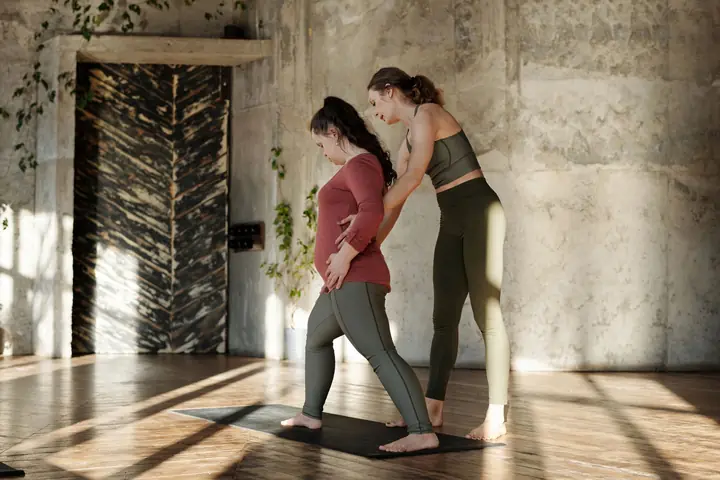
Some teachers use touch to guide students, for example pressing lightly on the hips in Downward Dog or turning a shoulder in a twist. Done well, an adjustment can clarify a pose quickly. It is always optional. You have the right to decline any touch, before class or in the moment, without explaining why.
Many studios now use consent cards or tokens you place on your mat to show whether you would like hands-on help, or ask the class to signal with a raised hand or a word. If nothing like this is offered, tell the teacher before class if you prefer not to be touched. If an adjustment is uncomfortable, painful or unwanted, say "no thank you" or "please stop," and a professional teacher will step back immediately.
Savasana
Most classes end with savasana, usually called Corpse Pose or final relaxation. You lie on your back, arms by your sides, legs relaxed, eyes closed, for five to ten minutes. The teacher may guide you through relaxing each part of the body, or leave you in silence.
New students sometimes find savasana the hardest part of class. Lying still without doing anything can feel strange, and the mind often gets busy. That is fine. You do not need to empty your mind. Simply notice the breath and the contact of your body with the floor. Some people fall asleep, which is common and harmless.
Make yourself comfortable. A rolled blanket under the knees eases the lower back. A folded blanket under the head can help if your chin tilts up. Put on your warm layer before you lie down, since body temperature drops quickly. If lying on your back is uncomfortable, for example in later pregnancy, lie on your side with a bolster or blanket between your knees. The Corpse Pose card explains other options.
Try not to leave during savasana. When the teacher calls you back, roll to one side and pause before pressing up to sit.
After class
Many classes close with the word namaste, often with the palms together at the chest. It is a respectful greeting in many parts of South Asia. Join in if you are comfortable, or simply sit quietly. No one is judging.
Return your props, roll up your mat, and drink some water. If you have a question about a pose or noticed discomfort, it is a good moment to ask the teacher briefly. Expect to feel relaxed, perhaps a little tired. Some muscle soreness the next day or two is common. Joint pain or pain that does not fade is worth mentioning to the teacher or a health professional.
Give a new style or teacher at least two or three classes before deciding. The first class is mostly about learning the layout, and the second is often when things start to make sense.
Feeling self-conscious
Almost everyone feels self-conscious in their first class. You may worry that you are the least flexible person in the room, that you will lose your balance or fall behind. In practice, the other students are concentrating on their own breathing and balance. Most of them remember their own first class clearly.
A few things help. Arrive early so you are not rushing. Set up where you can see others. Remind yourself that the version of the pose you can do today is the right one for today, whatever it looks like. Mirrors, if the room has them, are for checking alignment and can be ignored.
If group classes feel too exposed for now, a private session with a teacher or a few weeks of home practice can build confidence. Studios that describe themselves as inclusive, body-positive or accessible, and classes aimed at larger bodies, older adults or specific groups, can also feel more welcoming.
 StartBeginner's GuideExpectations, frequency and a gentle 15-minute routine.
 StartMats & PropsWhat each prop is for and how to use it.
 Body & HealthPracticing SafelyWarning signs, contraindications and when to seek advice.
 ReferenceQuestions & AnswersShort answers to the questions beginners ask most.