In short
- Answers are grouped into getting started, practice, body and health, and philosophy and culture.
- Each answer is brief and links to a fuller page elsewhere in the guide.
- For personal medical questions, speak with a doctor or physical therapist who knows your history.
Getting started
Do I need to be flexible to start yoga?
No. Flexibility is one of the things yoga develops over time. Beginner classes offer variations and props for stiff bodies, and many poses are about strength, balance or rest more than stretch. See the Beginner's Guide.
Which style of yoga should I try first?
A class labeled beginner, gentle or level 1 in Hatha or Iyengar yoga is the most reliable start for most people. If you are already active, a slow Vinyasa class also works. Leave hot, power and Ashtanga classes until you know the basic poses. Styles of Yoga compares them in detail.
Am I too old, too heavy or too unfit for yoga?
Almost certainly not. Yoga can be adapted for nearly any age, size or fitness level, including chair-based practice for people who cannot get to the floor. Look for classes described as gentle, accessible, or aimed at older adults or larger bodies, and tell the teacher about any health concerns beforehand.
What should I wear and bring to my first class?
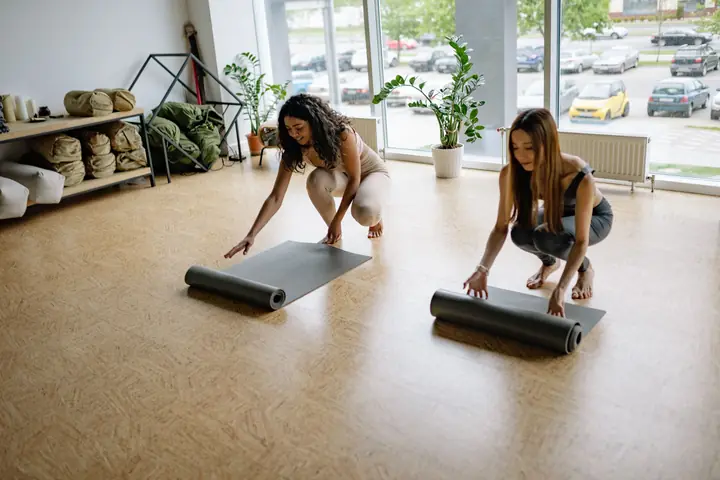
Comfortable, stretchy clothes that stay in place when you bend over, and a water bottle. You practice barefoot. Most studios lend mats and props, but check ahead. Your First Class covers arriving, etiquette and what to expect.
Can I learn yoga at home without a teacher?
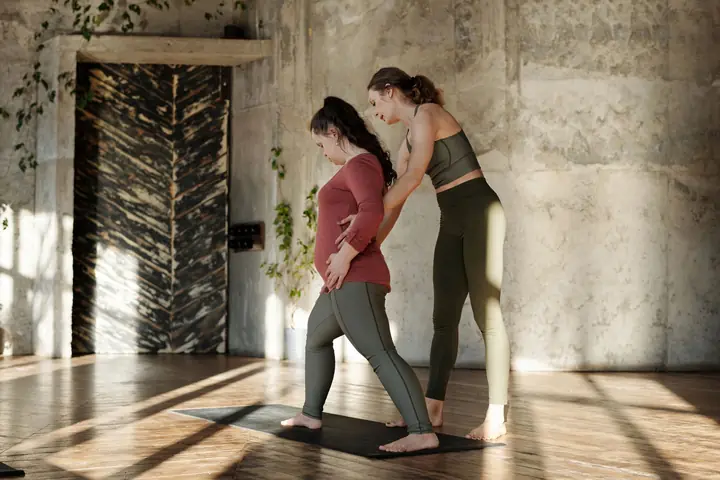
You can learn a lot at home, and many people practice mostly on their own. A few classes with a teacher early on are still worth it, because they catch habits you cannot see yourself. Stay with beginner poses and move carefully. Practicing at Home has three complete routines.
What equipment do I actually need?
Just a mat to start, and even that is optional at studios that lend them. For home practice, two blocks and a strap are the most useful additions. Books, belts and blankets make good substitutes. See Mats & Props.
Practice
How often should I practice?
Two or three sessions a week is a solid routine, and short daily practice is even better. Regularity matters more than length: three 20-minute sessions usually do more than one long class a week. Take easier days or rest days, especially if you practice vigorous styles.
How long before I notice a difference?
Many people feel calmer or more relaxed after a single session. Changes in strength, balance and ease of movement usually become noticeable over four to eight weeks of regular practice. Flexibility, especially in the hamstrings and hips, tends to change more slowly, over months.
Should I eat before practicing?
Avoid a large meal for two to three hours before practice, since twists, folds and inversions are uncomfortable on a full stomach. A light snack an hour before is usually fine. Drink water through the day, and have some after practice.
What is the best time of day to practice?
Whenever you will actually do it. Morning practice can feel stiffer but energizing, and is easier to protect from interruptions. Evening practice often feels more flexible and can help you wind down, though very vigorous sessions right before bed may keep some people awake. Try both and see what sticks.
Why do I breathe through my nose?
Most yoga traditions teach nasal breathing during postures because it tends to slow the breath and makes it easier to keep rhythm with movement. Treat it as a guideline. If you have a blocked nose or need more air during effort, breathe through the mouth. See Breathwork.
Is it okay to skip savasana?
It is better not to. The final rest in Corpse Pose lets the heart rate and breathing settle and gives you a transition back to the day. Even two or three minutes at the end of a short home session is worthwhile.
Body & health
Is yoga good exercise?
It depends on the style. Vigorous Vinyasa, Ashtanga and power classes raise the heart rate and build strength; gentle and restorative classes mainly build mobility and relaxation. Most health guidelines recommend combining muscle-strengthening activity with aerobic exercise, so yoga works well alongside walking, cycling or swimming. See Benefits of Yoga.
Can yoga help with back pain?
Research summarized by the NCCIH suggests yoga may help some people with chronic low-back pain, and some studies have found effects similar to other exercise-based approaches. It is not a cure, and pain that is severe, sudden, follows an injury, or comes with numbness, weakness or bladder changes needs medical assessment first. Choose gentle classes and tell the teacher. See Practicing Safely.
Is it normal to feel sore after yoga?
Mild muscle soreness a day or two after a new or harder session is normal and fades within a few days. Pain in joints, sharp pain during a pose, or pain that lasts or worsens is not normal. Ease off, modify or skip the poses that caused it, and get advice if it persists.
Can I do yoga if I have an injury or a health condition?
Often yes, with adaptations, but check with your doctor or physical therapist first and tell your teacher before class. Conditions such as high blood pressure, glaucoma, osteoporosis, recent surgery and joint problems may mean avoiding certain poses, such as inversions or deep twists. Practicing Safely lists common contraindications.
Is yoga safe during pregnancy?
Many people practice during pregnancy, and dedicated prenatal classes are widely available. Get your healthcare provider's approval, tell your teacher, and avoid hot yoga, deep twists, lying flat on the belly, and intense core work. After the first trimester, long periods lying flat on the back may be uncomfortable; lie on your side instead.
What about hot yoga?
Hot yoga is practiced in heated rooms, often around 35 to 40°C (95 to 104°F). Some people enjoy it, but heat increases the risk of dehydration, dizziness and overstretching. It is not recommended during pregnancy or for people with heart conditions or heat intolerance. Hydrate well, leave the room if you feel faint, and consider starting with unheated classes.
Philosophy & culture
Is yoga a religion?
Yoga developed within Indian religious and philosophical traditions and is connected to Hindu, Buddhist and Jain thought. Modern posture-based classes are usually taught without religious content, and people of many faiths and none practice them. How much of the philosophy you explore is up to you. See What Is Yoga? and Philosophy & the Eight Limbs.
How old is yoga?
Scholars disagree. Ideas linked to yoga appear in early Upanishads from the first millennium BCE, and the Yoga Sutras of Patanjali are commonly dated to roughly the early centuries CE, though estimates vary. Posture-focused Hatha yoga developed later, and much of today's class format took shape in the 20th century, as Mark Singleton describes in Yoga Body (2010). See History of Yoga.
What do Om and namaste mean?
Om is a sacred syllable in Hindu, Buddhist and Jain traditions, described in the Upanishads as representing ultimate reality. Namaste is a respectful greeting used in India and Nepal, often translated as "I bow to you." Joining in with either is optional in any class. See the Sanskrit Glossary.
Do I need to learn Sanskrit or chant?
No. Teachers often use Sanskrit pose names alongside English ones, and you will pick up common terms naturally. Chanting is optional, and many classes include none. Learning a little Sanskrit can deepen understanding and respect for the tradition, but it is not required to practice.
What are the eight limbs of yoga?
The eight limbs (ashtanga) come from the Yoga Sutras of Patanjali: ethical restraints (yama), observances (niyama), posture (asana), breath regulation (pranayama), withdrawal of the senses (pratyahara), concentration (dharana), meditation (dhyana) and absorption (samadhi). Posture is only one of the eight. See Philosophy & the Eight Limbs.
How can I practice respectfully, given yoga's cultural roots?
Learn something about where yoga comes from, pronounce terms with care, and avoid using sacred symbols or deities as decoration. Support teachers who acknowledge the tradition's history, including South Asian teachers. Curiosity and humility go a long way. History of Yoga is a good place to start.