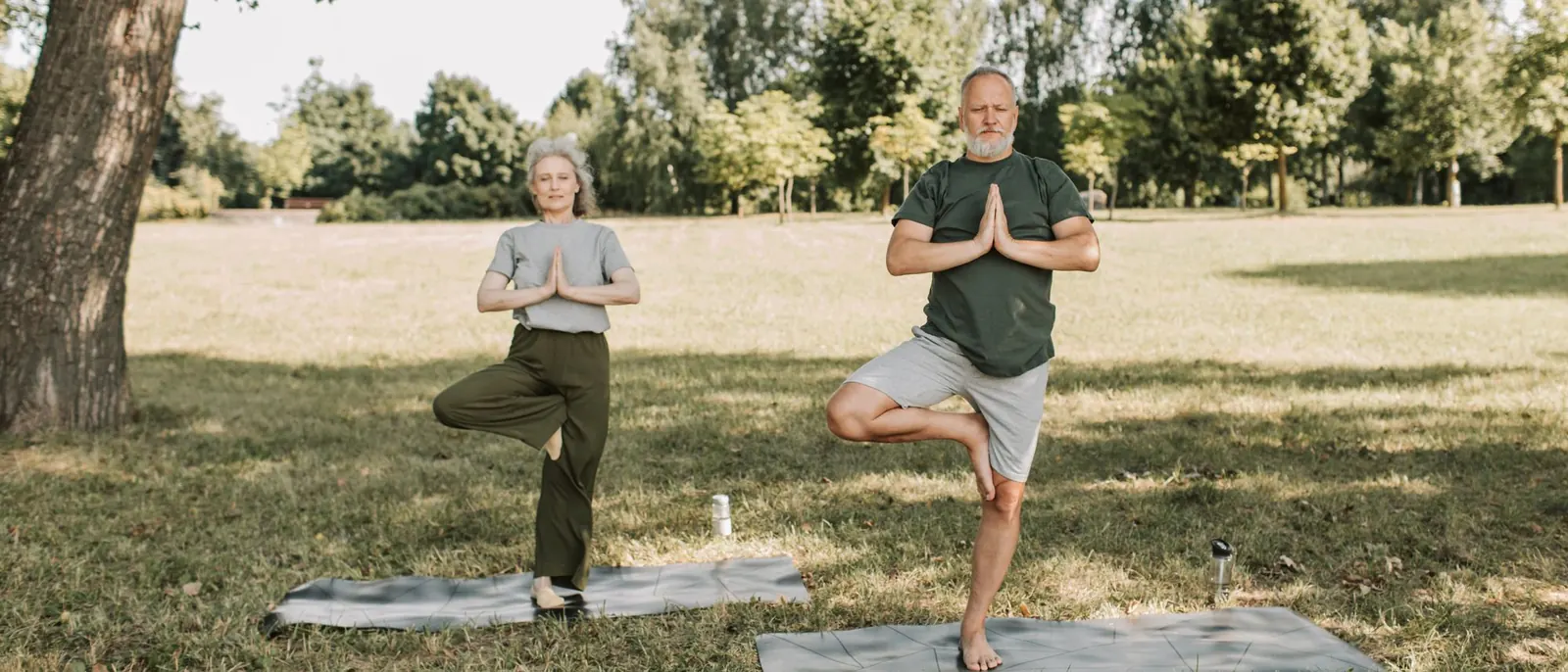
In short
- The most consistent evidence is for improved flexibility and balance, some relief from chronic low back pain, and reduced feelings of stress.
- Promising but less certain findings cover sleep, mood, blood pressure and other cardiovascular markers.
- Yoga is a helpful complement to medical care. It does not cure disease, and many studies are small or short.
- Most people notice changes in how they feel within weeks. Physical changes like flexibility and strength build over months.
How to read this page
Yoga attracts enthusiastic claims, and some of them go well beyond the evidence. This page tries to separate what research reasonably supports from what is plausible but unproven, and from what is simply marketing. It draws on the general picture presented by the U.S. National Center for Complementary and Integrative Health (NCCIH), part of the National Institutes of Health, which maintains plain-language summaries of yoga research, and on the broader body of reviews in the field. We describe findings in general terms rather than quoting individual studies.
A few terms are worth knowing. A randomized controlled trial assigns people by chance to yoga or to a comparison, such as usual care, another exercise or education. A systematic review pools many studies to look for consistent patterns. When we say "research suggests," we mean that several studies point the same way but that important questions remain. When evidence is weaker, we say so.
Keep in mind too that "yoga" in research can mean very different things: gentle chair classes, vigorous flowing sessions, breathing and meditation alone, or a mix. Results from one kind of program do not automatically apply to another. For an overview of the variety, see Styles of Yoga.
Flexibility and balance
Improved flexibility is the benefit most people expect, and the evidence broadly supports it. Regular practice tends to increase range of motion in the hamstrings, hips, shoulders and spine. This is not surprising, since holding stretches over time is a well-established way to improve flexibility. Much of the early change appears to come from the nervous system becoming more tolerant of stretch sensation, with structural changes in muscle and connective tissue following more slowly.
Balance also tends to improve. Standing and balancing poses train the ankles, hips and the body's sense of position (proprioception), and require sustained attention. Research on balance is particularly relevant for older adults, where studies suggest yoga may improve measures of balance and mobility. Whether this translates into fewer falls is less clear, and yoga has not been shown to prevent falls as reliably as some targeted exercise programs. Poses such as Tree Pose and Warrior II are typical examples of the work involved.
More flexibility is not always better. People who are already very flexible, or hypermobile, may benefit more from strength and control than from further stretching. See flexibility, mobility and stability.
Strength and fitness
Yoga builds strength by using body weight in held positions and slow transitions. Standing poses load the legs, Downward-Facing Dog and plank-based poses load the arms and shoulders, and many poses require sustained work from the trunk. Studies suggest regular practice can improve muscular strength and endurance, particularly in people who were previously inactive.
There are limits. Yoga provides relatively little resistance for pulling movements, since there are few poses where you pull against a load, and the load in most poses cannot easily be increased over time. Vigorous styles raise the heart rate, but most yoga is light to moderate in intensity. Public health guidelines generally recommend both aerobic activity and muscle-strengthening work each week. Yoga can contribute to both, especially muscle-strengthening, but many people will want to combine it with walking, cycling, swimming or resistance training for fuller fitness.
Back pain
Chronic low back pain is one of the most studied uses of yoga, and one where the evidence is relatively strong. Reviews generally find that yoga can lead to modest improvements in pain and in day-to-day function for people with chronic, nonspecific low back pain, meaning back pain without a specific identifiable cause such as a fracture or infection. The size of the benefit is similar to that of other forms of exercise therapy.
On the strength of this evidence, clinical guidelines in several countries, including guidance from the American College of Physicians in the United States, list yoga or exercise programs that can include yoga among the non-drug options that may be considered for chronic low back pain. That does not mean yoga suits everyone with back pain, or that any class will help. Programs studied in research are usually designed for back pain and taught by experienced teachers, with gentle poses, modifications and gradual progression.
If you have back pain, a few points apply:
- Get new, severe, or worsening back pain assessed by a doctor first, especially if it comes with numbness, weakness, fever or changes in bladder or bowel control.
- Start with a beginner or therapeutic class and tell the teacher about your back.
- Move within a comfortable range. Mild, familiar discomfort is often acceptable; sharp or radiating pain is a signal to stop.
Evidence for neck pain is more limited but points in a similar direction. For practical guidance, see protecting the lower back.
Stress, anxiety and mood
Many people start yoga for its effect on stress, and research generally supports this use. Studies suggest yoga can reduce self-reported stress and may help with symptoms of anxiety and depression. Some research also looks at physiological markers of stress, such as heart rate variability and cortisol, with mixed results.
It is hard to know which parts of yoga are responsible. Physical activity, slow breathing, focused attention, relaxation and the social setting of a class all have their own effects, and most yoga combines several. The breathing and meditation components are discussed on the Breathwork and Meditation pages.
For diagnosed anxiety disorders or depression, yoga may be a helpful addition to treatment, and some studies are encouraging. It should not replace evidence-based care such as therapy or medication, and anyone with significant symptoms should talk to a health professional.
Sleep
Studies of yoga and sleep, including in older adults, people with insomnia, and people living with chronic illness, suggest that regular practice may improve sleep quality. Findings vary, and much of the research relies on questionnaires rather than objective measures. The mechanisms are plausible: yoga may reduce physical tension and pre-sleep arousal, and slow breathing tends to calm the nervous system.
If you want to try yoga for sleep, gentle and restorative practices in the evening make more sense than vigorous classes close to bedtime. A short sequence of restorative poses, such as Legs-up-the-Wall and Reclining Twist, followed by a long-exhale breathing pattern, is an easy place to start.
Heart and cardiovascular markers
Research has looked at yoga's effect on blood pressure, cholesterol, blood sugar and body weight. Some reviews suggest that yoga may produce small improvements in blood pressure and other cardiovascular risk factors, similar in size to those from other forms of exercise. The evidence is less consistent than for back pain, and many studies are small or short.
Yoga has also been studied as part of cardiac rehabilitation and for people living with heart conditions. It may help with quality of life and stress in these groups. Anyone with heart disease should, of course, follow their cardiologist's advice about exercise, and some forms of yoga, such as hot yoga or forceful breathwork, may not be suitable. See conditions requiring care.
Yoga is not a treatment for high blood pressure or heart disease. At best it is one part of a healthy lifestyle that also includes other activity, diet, sleep and medical care.
Older adults
Yoga adapts well to older bodies, and research on older adults is growing. Studies suggest benefits for balance, mobility, flexibility, strength in the legs and sleep, as well as mood and quality of life. Chair-based yoga makes practice possible for people who cannot easily get down to or up from the floor.
Older practitioners should be aware of a few specific risks. Deep forward bends and loaded spinal flexion may be inadvisable for people with osteoporosis. Inversions and head-down positions are not recommended with glaucoma or uncontrolled blood pressure. Transitions between floor and standing can be where falls happen. A teacher experienced with older students, and classes described as gentle or senior-focused, are a good starting point. See Practicing Safely for more.
What research does not show
Being clear about the limits of the evidence is part of taking yoga seriously.
- Yoga does not cure disease. It has not been shown to cure cancer, diabetes, heart disease, autoimmune conditions or mental illness. It may help people living with these conditions feel better and function better.
- "Detox" claims are not supported. Twists do not "wring out" the organs, and no pose has been shown to remove toxins. The liver and kidneys do that job.
- Specific poses rarely have specific effects. Claims that a particular pose stimulates the thyroid, massages the kidneys or balances hormones are generally not backed by evidence.
- Weight loss is modest at best. Most yoga burns fewer calories than brisk aerobic exercise. Some people report healthier habits and body awareness that indirectly support weight management.
Why the evidence is often uncertain
- Small, short studies. Many trials involve small groups followed for a few weeks or months.
- Hard to blind. Participants know they are doing yoga, so expectation can influence results, especially for self-reported outcomes like pain and stress.
- Varied programs. Studies differ widely in style, length and intensity, making comparisons difficult.
- Comparison groups. Yoga often looks better against doing nothing than against other active treatments like exercise or physical therapy.
- Who takes part. Study volunteers may be healthier or more motivated than the general population.
These are normal limitations for a young research field, and they apply to many exercise and lifestyle interventions. The fairest description of most of yoga's benefits is "likely helpful, modest in size, and still being studied."
Realistic timelines
How quickly you notice changes depends on how often you practice, what kind of yoga you do, and where you start. The following are rough, experience-based expectations for someone practicing two to three times a week, not guarantees.
| Change | When many people notice it | Notes |
|---|---|---|
| Feeling calmer after a session | From the first session | Usually temporary at first; regular practice makes it more reliable. |
| Better body awareness | A few weeks | Noticing posture, tension and breath in daily life. |
| Flexibility | Several weeks to a few months | Early gains are often in stretch tolerance; lasting change takes longer. |
| Strength and balance | One to three months | Faster in people who were previously inactive. |
| Back pain | Several weeks to a few months | Research programs typically run eight to twelve weeks or longer. |
| Sleep and mood | Variable | Some notice within weeks; for others, changes are gradual or small. |
Consistency is the main factor you can control. Short, regular sessions at home tend to produce more than an occasional long class. The Beginner's Guide and Practicing at Home pages have practical routines.
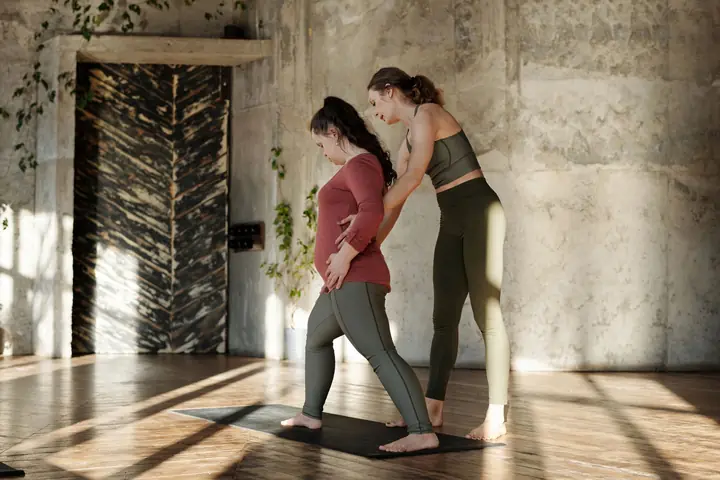 Body & HealthPracticing SafelyCommon injuries, health conditions and how to protect yourself.
 Body & HealthAnatomy & AlignmentHow the spine, hips and shoulders move in practice.
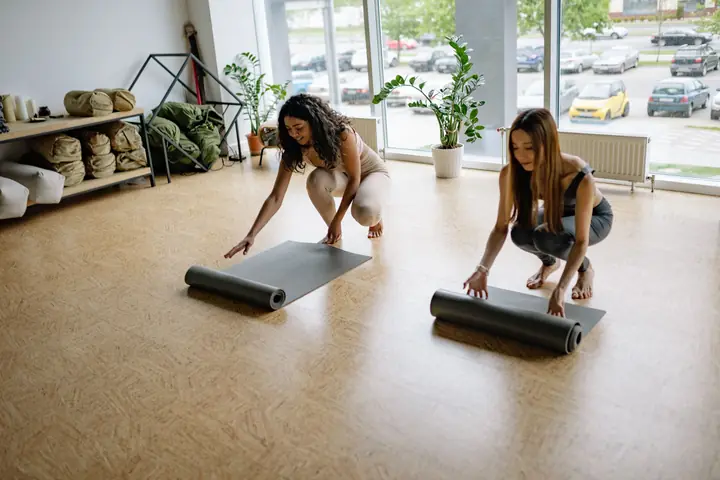 StartBeginner's GuideEverything to know before you begin.
Sources & further reading
- U.S. National Center for Complementary and Integrative Health (NCCIH), "Yoga: What You Need To Know" and "Yoga: Effectiveness and Safety."
- NCCIH pages on low back pain and complementary health approaches.
- Clinical practice guidelines on low back pain from professional and national health bodies, which list yoga among non-drug options.